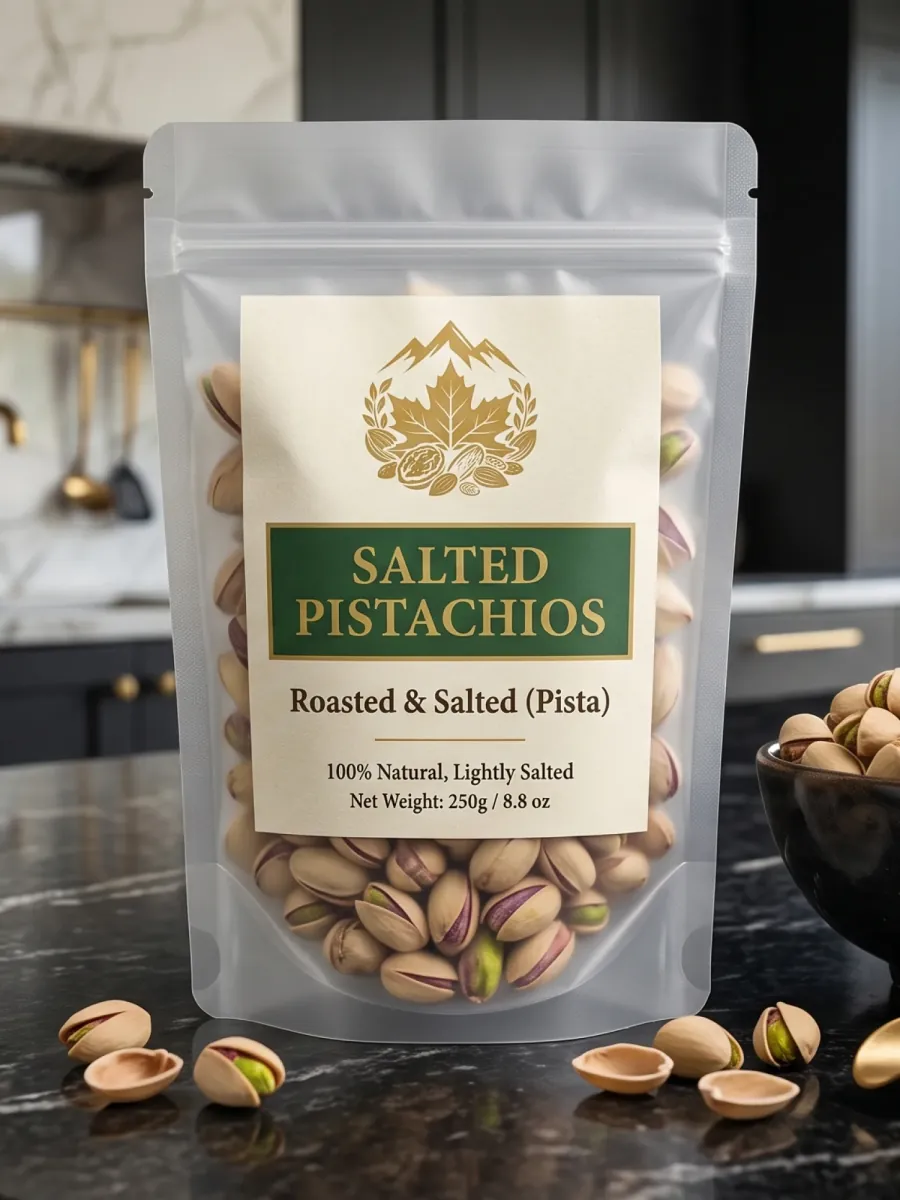
The shell is the first thing you see, and it can mislead
If you buy in-shell pista, the shell colour decides what you think of the nut. Bright red looks festive. Pure white looks clean. Neither is the natural colour, and dyed pistachios are the reason many buyers start to doubt what they are eating.
The honest answer is simple. A natural pistachio shell is beige, and it may carry a few marks. Anything far from beige deserves a question to the seller.
This guide shows what the natural shell looks like, why some shells are red or white, and six checks you can do at home. Valley Origin sells Salted Pistachios, so we say clearly what we know and what we do not.
Are red pistachios dyed?
Yes. The natural pistachio shell is beige, so a bright red shell has been coloured. The dye was first used to hide stains on shells that were picked by hand. Today most pistachios are machine harvested and the shells stay unstained.
Wikipedia’s pistachio entry states that the shell is “naturally a beige color” but may be dyed red or green in commercial pistachios. It adds that the dye “was applied to hide stains on the shells caused when the nuts were picked by hand.” A large US grower’s FAQ page gives the same account.
Some sellers kept the habit for looks. Another US grower’s FAQ says red dye was later used to make nuts stand out in vending machines, and some brands still dye them for marketing. That is a sales choice, not a quality sign.
What colour is a natural pistachio shell?
A natural shell is beige to pale tan. It can have small darker marks, a slight pink or yellow tint near the split, and uneven colour from nut to nut. Even colour all over, in any bright shade, is the warning sign.
A pistachio ripens on the tree and the shell splits partly open as the kernel fills. The outer hull is rosy at that stage and can leave marks on the shell. That is natural.
So do not expect a catalogue photo. Real in-shell pista looks a little mixed. A pack where every shell is the same bright red or the same chalky white looks processed.
How do you check shell colour and kernel before buying?
Use six checks: look at the shell colour, rub a few shells on a damp white tissue, read the label, look at the kernel, smell the pack and ask the seller. One check is not proof. Two or three together tell you far more.
- Look at the whole pack in daylight. Beige with natural variation is right. Uniform red, pink or bright yellow is dyed. A uniform stark white is a question mark.
- Rub a few shells on a damp white tissue. Wipe firmly for a few seconds. Colour on the tissue means surface dye. No colour does not prove a shell is undyed, but colour on the tissue is a clear answer.
- Read the label. Look for the ingredients list. Loose or unlabelled nuts give you nothing to check. Packed nuts should list what is inside, and a colour should be named if used.
- Open a few nuts and look at the kernel. Check that the kernel is plump and pale green to yellowish, with a thin purple-brown skin. Dye on the shell tells you nothing about the kernel, and an empty shell can hide behind a pretty colour.
- Smell the pack and a cracked nut. Fresh pista smells mild and sweet. A sharp, sour or chemical smell is a reason to put it back. Our guide to telling if pistachios are bad covers this in detail.
- Ask the seller what was done to the shell. A direct question gets a direct answer from a seller who has nothing to hide.
Wash your hands after cracking nuts if the shells leave colour on your fingers.
Why do some pistachio shells look white?
Shells that look very white may have been bleached, or may simply be old, sun-faded or washed. We could not confirm how common bleaching is in India. Read a chalky white shell as a prompt to ask questions, not as proof.
One group, the American Pistachio Growers, says on its trade page that American shells are naturally tan and never bleached, while Iranian nuts are often bleached to hide discoloration. That is an industry group promoting its own nuts, so weigh it as a claim, not a finding.
Our other posts compare the two origins on size, shell and taste. See Iranian vs American pistachios in India. Origin alone does not tell you whether a pack was bleached. The pack in your hand does.
What do dyed or coloured pistachios tell you about quality?
Not much by themselves. A dyed shell says the seller wanted a certain look. It does not tell you whether the kernel is fresh, plump or properly stored. Judge the nut inside, and read heavy colouring as a reason to look harder.
Colour on the shell can hide stains, old stock or uneven nuts. It can also be harmless decoration. You cannot tell which from the outside.
Check what the law says about colours in India. The Food Safety and Standards rules allow only listed colours, within limits, and a review in PMC calls adding non-permitted colours adulteration. We have not checked the rule for in-shell nuts specifically, so if you are unsure, ask the seller which colour was used.
Keep in mind that pistachios are tree nuts. If you have a nut allergy or are buying for a child, ask your doctor what is right for you.
What should it cost?
There is no reliable per-kilo figure for in-shell pista that fits every pack, so we do not quote one. Prices move with origin, size, season and whether the nuts are salted. A price far below other sellers is a warning, not a bargain.
We could not find a price range from a source we could open, so we leave the numbers out rather than guess. A practical approach works better. Compare packs of the same size, from the same kind of origin, and the same salted or unsalted type.
Very cheap in-shell pista often means a high share of closed or empty shells, old stock or heavy colouring to cover both. Our guide to pistachio shells that will not open explains how to judge value by how many shells open and how many hold a full kernel.
What should you ask a seller of pistachios?
Ask five things: where the pistachios are from, what grade or size they are, when they were packed, whether anything was added to the shell or kernel, and what happens if you are unhappy. A clear seller answers all five without fuss.
- Origin. Which country or region, and how do they know?
- Grade or size. Is the count per pack stated?
- Packing date. Roasted and salted nuts go off sooner than raw ones. Our raw vs roasted salted pistachios post explains why.
- Treatments. Is the shell dyed, bleached or coated? Is the kernel salted, flavoured or coloured?
- Returns. Can you return a pack that smells off or arrives damp?
If a seller dodges any of these, buy somewhere else.
Where does Valley Origin stand on each?
Valley Origin Salted Pistachios are in-shell pistachios, roasted and lightly salted. The ingredients are pistachios and salt, nothing else. We do not state an origin for them, so we make no Kashmir claim for this product.
We prefer to say what we can stand behind. The pack lists pistachios and salt as the ingredients. It is natural pista in the shell, sealed in a pouch. You can see the sizes and current prices on the Salted Pistachios page.
Our wider story is separate. Valley Origin is a family business that began in Kashmir in 1975 and sells direct from growers. Our hero product is Kashmiri Mamra Badam, and you can read more about us. If you have questions about shipping or an order, our support team replies within one to two business days.
Frequently asked questions about dyed pistachios
Are dyed pistachios safe to eat?
We could not find a source that tests the safety of dyed pistachio shells, so we cannot give a firm answer. The dye is on the shell, not the kernel, but it can rub onto your hands. Ask the seller which colour was used.
Colours must meet India’s permitted-colour rules. If you are pregnant, feeding a child or have an allergy, check with your doctor.
Why were pistachios dyed red in the first place?
Early dye covered stains left on shells by hand picking. The marks came from the hull and oils on the nut. When machine harvesting spread, the stains mostly stopped, but some sellers kept the red for looks.
This is the account given by both Wikipedia and a large US grower.
Is a white pistachio shell bad?
Not always. A pale shell can come from age, sun or washing, and some sellers may bleach shells. We could not confirm how common that is. Check the kernel, the smell and the label before you decide.
A fresh, plump, sweet-smelling kernel matters more than the shell shade.
Do pistachios with open shells taste better?
An open shell means the kernel filled out and split the shell, which is the normal sign of a mature nut. Taste depends on freshness and storage as much as on the shell. Open shells are a good sign, not a guarantee.
Closed shells are covered in our guide to pistachio shells that will not open.
Can I wash dye off pistachio shells?
You can wipe surface dye with a damp cloth, but a clean shell does not tell you what the nut was. Washing wet shells also adds moisture, so dry them fully and store them airtight to avoid mould.
Our storage steps are in the guide to pistachios going bad.
Buy the kernel, not the colour
A good pistachio is judged on what is inside. The shell should be beige, the kernel plump and green, and the smell clean. Colour that is too bright or too white is a reason to ask what was done.
Use the six checks above, compare like with like, and ask the seller direct questions. If you want in-shell pista with a short ingredients list, see the Salted Pistachios page for sizes and current prices, or browse all our products.