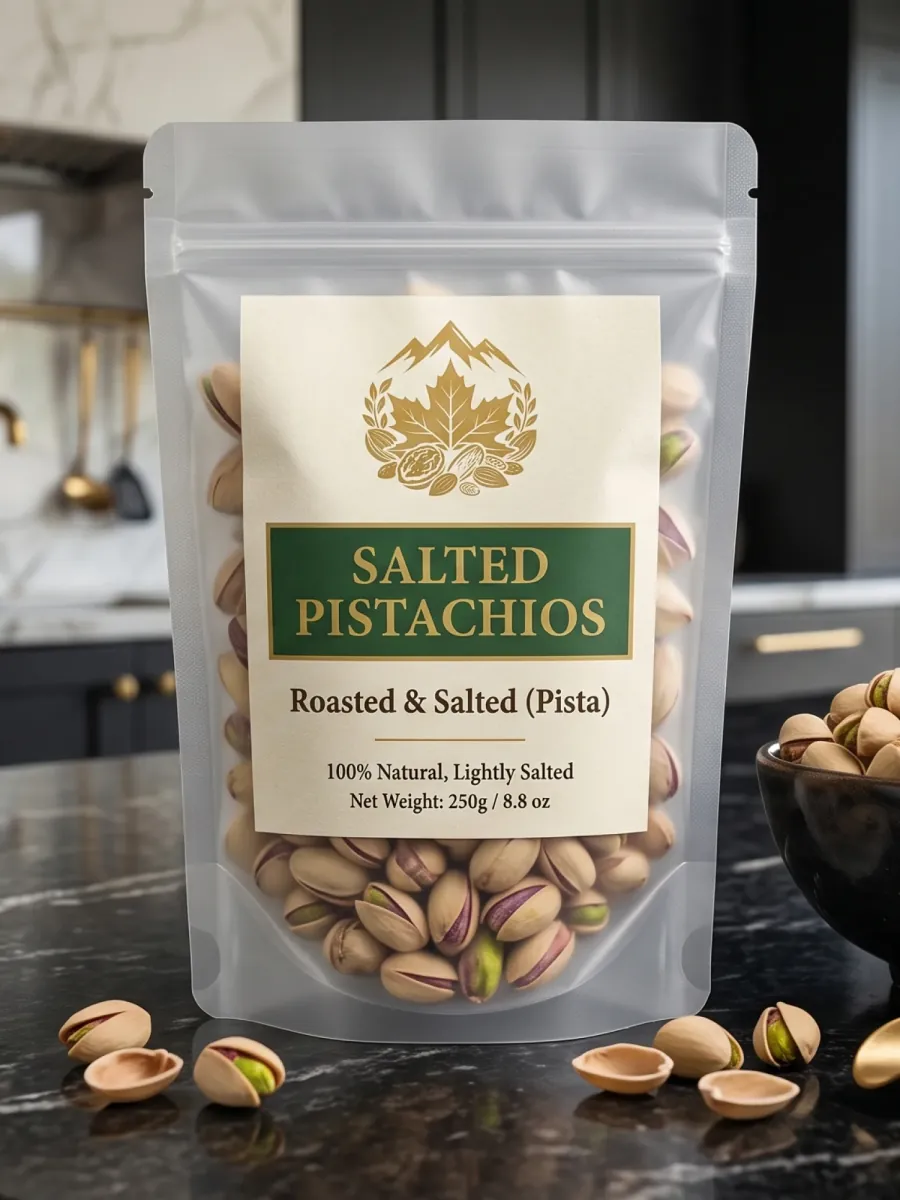
Same nut, two very different bowls
Roasted salted pistachios vs raw is a choice most Indian buyers make by habit. The salted pack is the one on the party table. The raw pack is the one that goes into kheer, barfi and phirni.
The nut underneath is the same. What changes is the flavour, the sodium you eat with each handful and how long the pack stays good. Some buyers also want to know how to spot a pack that is only lightly salted.
This guide compares the two on taste, nutrition, shelf life and gifting, and tells you honestly when raw is the better buy. If you want to see what we sell, our Salted Pistachios are in the catalogue, and the products page lists the rest.
What is the difference between raw and roasted salted pistachios?
Raw pistachios are shelled or in-shell nuts that have not been roasted or salted. Roasted salted pistachios are heated, usually in the shell, and seasoned with salt. The nut is the same. Roasting adds a toasted flavour, and the salt adds sodium.
“Raw” in the shop usually means the nut was dried but not cooked. The kernel is pale green, soft and slightly sweet. It tastes mild, almost milky, and the texture is a little chewy.
Roasting dries the nut further and brings out a deeper, toastier flavour. The kernel turns crisper and the shell often cracks open more easily. Salt is added before or after roasting, and the amount varies by seller.
That variation is the real problem. “Salted” can mean a light dusting or a heavy coat. The label should tell you which one you are buying. For the full range of nut sizes and origins, see our guide to Iranian vs American pistachios.
How do raw and roasted salted pistachios compare on taste?
Roasted salted pistachios taste stronger, toastier and more savoury, and the crunch is sharper. Raw pistachios taste mild, sweet and slightly grassy, with a softer bite. Salted wins for snacking. Raw wins when the nut is an ingredient and should not fight the dish.
Say you are making pista kulfi for ten guests. Salted nuts would make the dessert taste off, and you would not get the pale green colour of the raw kernel. Raw is the right choice here.
Now say you are setting out a bowl before dinner. Raw nuts will taste flat next to a glass of chai or a drink. The salt makes you want another one, which is the point of a snack nut.
One practical difference: in-shell nuts slow you down. You crack each one, and that pause helps you eat fewer. Shelled kernels disappear faster.
If you cook with pista, you can also roast raw nuts yourself in a dry pan for a few minutes. That gives you control over the toastiness, and you add salt only if you want it.
How do raw and roasted salted pistachios compare on nutrition?
Roasting and salting leave calories, protein and fat almost unchanged. The big difference is sodium. USDA data lists about 0 mg of sodium in 100 g of raw pistachios and 428 mg in 100 g of dry roasted, salted ones.
Here are the USDA FoodData Central values per 100 g of shelled kernels, as reproduced by a data site that credits USDA:
| Per 100 g of kernels | Raw | Dry roasted, salt added |
|---|---|---|
| Energy | 561 kcal | 569 kcal |
| Protein | 20.5 g | 21.1 g |
| Fat | 45.0 g | 45.8 g |
| Sodium | 0 mg | 428 mg |
The energy, protein and fat gaps are small. They come from water lost in roasting and the salt added, so they are not a reason to pick one over the other. The figures come from the USDA entries for raw pistachio nuts and dry roasted pistachios with salt added.
How much sodium is in a handful of salted pistachios?
A 30 g handful of shelled, dry roasted salted pistachios has roughly 130 mg of sodium, using the USDA figure of 428 mg per 100 g. That is about 6% of the 2,000 mg daily limit WHO sets for adults.
The sum is simple: 428 mg x 0.3 = about 128 mg. WHO recommends less than 2,000 mg of sodium a day for adults, which equals less than 5 g of salt.
So one handful is not a salt problem. The trouble starts when the bowl keeps refilling, and when the rest of your day is already salty with pickles, namkeen, papad and bread. Two or three handfuls with a heavy meal add up fast.
The USDA numbers describe shelled kernels. An in-shell pack can differ, because salt can sit on the shell and on your fingers as well as on the nut. Use the figure as a guide, not a measurement of your pack.
If you have high blood pressure, kidney disease or any other condition where your doctor limits salt, ask your doctor which type and how much is right for you.
How do raw and roasted salted pistachios compare on price and shelf life?
Raw pistachios are usually the cheaper and longer-lasting buy. Roasted salted pista costs a little more for the extra processing and goes stale sooner. Compare price per 100 g of kernel, not per kg of in-shell nuts, because the shell adds weight.
We have not quoted a rupee range here, because we could not verify a current, sourced one for each type, and pistachio prices move with origin, size and season. When you compare packs, look at three things: the weight on the pack, whether the nuts are in the shell, and the price per 100 g.
In-shell nuts look cheaper per kilo, but a good share of that weight is shell you throw away. A shelled pack costs more per kilo and gives you more nut for it.
Shelf life is where the two types clearly differ. One kitchen-science source says roasted pistachios last about one-fourth as long as raw ones, because roasting removes some of the antioxidants that protect the nut from air. It lists about a year in the fridge and up to three years in the freezer for raw nuts. Take these as rules of thumb, not tested shelf lives.
For Indian weather, the sensible rule is this. Buy raw in bulk if you will use it over months. Buy roasted salted in a size you will finish in a few weeks. Our guide on how to tell if pistachios are bad covers the smell, taste and look of rancid nuts.
Which should you buy: roasted salted or raw pistachios?
Buy raw if you cook, bake, make sweets or watch your salt. Buy roasted salted if you want a snack for sharing, travel or a gift bowl. For a daily snack, a lightly salted pack is a fair middle path.
Match the nut to the job:
- For kheer, kulfi, barfi and baking: raw. The mild flavour and green colour stay clean, and you control the salt.
- For a party bowl or evening snack: roasted salted. It is ready to eat and needs no extra work.
- For daily eating when you watch sodium: raw, or a lightly salted pack, in a measured portion.
- For children: raw is simpler, and salted nuts are best kept small in quantity. Check with your doctor or paediatrician. Whole nuts are a choking risk for very young children.
- For a gift: it depends on the person. Roasted salted in the shell feels festive and shareable. Raw suits someone who cooks or avoids salt.
The honest answer is that neither is better. Raw is the more flexible nut. Roasted salted is the more enjoyable snack. If you eat pista only as a snack, the salted pack is not a mistake.
How can you tell a lightly salted pack from a heavily salted one?
Read the ingredient list and the sodium line on the pack. Lightly salted pista lists only pistachios and salt. Taste one nut. If your fingers are coated in salt and you wince, the pack is heavily salted, whatever the front says.
Use these checks before you buy:
- Read the ingredients. A short list is a good sign. Look for pistachios and salt. Extra flavourings, colour or oil mean a more processed snack.
- Check for a sodium figure. Packs with a nutrition table show sodium per 100 g. Compare it with the USDA figure of about 428 mg per 100 g for dry roasted salted kernels. A figure far above it suggests a heavy hand with salt.
- Look at the shell. A white crust of salt on the outside is a sign of heavy salting.
- Smell the pack. A sharp, paint-like smell means old oil. Skip it.
- Taste one. The nut should taste of pista first, and salt second.
Valley Origin sells Salted Pistachios (pista) in the shell, roasted and lightly salted. The ingredients are pistachios and salt, nothing else. They come sealed in a pouch in 250 g, 500 g, 1 kg and 2 kg packs, and see current prices on the product page.
Frequently asked questions about raw and roasted salted pistachios
Is roasted salted pista less healthy than raw?
Not necessarily. Calories, protein and fat are almost the same. The main difference is sodium, about 428 mg per 100 g in roasted salted kernels against close to zero in raw. In small portions the gap is minor. It matters if you must limit salt.
Both are the same nut with the same fat and protein. If your doctor has limited your salt, choose raw or ask for advice. Otherwise, portion size matters more than the type.
How much salt is on salted pistachios?
It varies by seller. USDA data for dry roasted, salted kernels shows about 428 mg of sodium per 100 g. A lightly salted pack should sit near that, and a heavily salted one will be much higher. Read the sodium line on the label.
Not every pack has a nutrition table. If yours does not, taste one nut and judge by that.
Which lasts longer, raw or roasted pistachios?
Raw pistachios last longer. One source puts roasted nuts at about one-fourth of the shelf life of raw ones. Keep both airtight, cool and dry, and finish roasted salted pista within a few weeks of opening.
In monsoon or summer, move the jar to the fridge. Let a cold jar warm up before you open it, so water does not condense on the nuts.
Are in-shell pistachios better than shelled ones?
Neither is better. In-shell nuts slow your eating and protect the kernel, but you pay for shell weight. Shelled kernels are ready to cook with. Sources disagree on whether the shell extends shelf life, so store both properly.
Choose in-shell for snacking and shelled for sweets and baking.
Which suits gifting, raw or roasted salted?
Roasted salted pistachios in the shell suit festive and family gifting, since they are ready to share. Raw suits someone who cooks or avoids salt. For a bulk or corporate order, send an enquiry through our contact page for a quote.
For general advice, see our post on choosing a dry fruit gift box. To ask about gifting orders, use the contact page.
Pick the nut for the job
Raw pistachios are the better ingredient. Roasted salted pistachios are the better snack. The sodium gap is real but small per handful, and it only matters if you eat the whole bowl or must limit salt.
Read the label, taste one nut and buy a size you will finish while it is fresh. If you want a lightly salted, in-shell pack, see our Salted Pistachios and check current prices on the product page.