Two kaju prices can both be fair, and still be far apart
You see cashew at one price in a shop and at another price online. Both say “premium kaju”. The cashew price per kg in India is a confusing number to compare, and the gap is rarely a trick.
Most of the gap comes from three things. The grade, meaning size and shape. The freshness of the pack. And the cost of the raw nut, which India mostly buys from abroad.
This guide explains each driver with trade data we could open, and gives you a way to compare rates fairly. We do not sell cashews. You can see what we do sell on our products page.
Why is cashew expensive in India?
Cashew costs more than many nuts because India imports most of its raw nuts and then shells, peels, grades and sorts them by hand and machine. Raw nut cost, a weak rupee and the labour in processing all reach the kernel price you pay.
Start with supply. A trade report of 5 August 2026 says India imported 575,804 tonnes of raw cashew nuts in January to June 2026, up 7.8% on the same months of 2025. The average import price was about USD 1,603 per tonne.
Kernels sell for far more. The same report puts the average Indian kernel export price at USD 7,802 per tonne. That is about 4.9 times the raw nut price (our arithmetic). The gap pays for shelling, peeling, grading, packing and the nuts lost along the way.
Currency matters too. A trade report of 11 May 2026 says a weak rupee and import disruption from African origins were pushing kernel prices up. It adds that a raw nut shortfall usually reaches kernel prices within four to six weeks.
Processing is slow work. Each nut must be cracked or steamed, the shell removed and the skin peeled without breaking the kernel. A broken kernel sells for less, which is why whole kernels cost more.
Where does India get its raw cashews?
India grows some raw cashew but imports the larger part from Africa. In the first half of 2026 the leading suppliers were Tanzania, Nigeria, Ghana and Mozambique. A good African crop lowers Indian kernel costs, and a poor one raises them.
The August 2026 report gives the split for January to June 2026. Tanzania sent 213,389 tonnes, Nigeria 141,738, Ghana 90,374 and Mozambique 35,486. Ivory Coast sent 19,097 and Togo 11,245.
The mix shifts fast. The same report says Togo fell from 70,884 tonnes to 11,245, while Nigeria grew 31.4%. Processors switch suppliers, and quality and cost change with each lot.
India’s own crop is smaller than its processing demand. A 30 July 2026 trade report estimates the 2025/26 domestic raw crop at about 725,000 tonnes, up from about 615,000 tonnes the year before. That is an industry estimate, not a government count.
Weather far away shapes your price. The May report notes weather stress during flowering in West Africa and a harvest shortfall against 2025. A kaju price in Delhi can follow rain in Ivory Coast.
Why do rates differ between W180, W240 and W320?
The W number is the maximum count of whole kernels per pound, so a smaller number means bigger kernels. Bigger kernels are fewer per kilo and need more sorting, so W180 and W240 cost more than W320, W450 or broken pieces.
We cover what the codes mean in our guide to cashew grades W180, W240 and W320. Here the question is how much the price moves.
The best grade-by-grade numbers we could open are export quotes for New Delhi, dated 15 October 2026. They are in euros per kg, free on board, so they are wholesale export prices and not what you pay in a shop.
| Grade (New Delhi, FOB, 15 Oct 2026) | EUR per kg | Against W320 |
|---|---|---|
| W240 | 7.65 | about 7% higher |
| W320 | 7.15 | base |
| W450 | 6.45 | about 10% lower |
| LWP (large white pieces) | 5.95 | about 17% lower |
| SWP (small white pieces) | 5.35 | about 25% lower |
The percentages are our arithmetic from the quoted prices. The point is the shape of the ladder, not the euro figure. Bigger and whole costs more. Smaller and broken costs less.
A retail jar adds packing, shop margin, GST and delivery on top. So never compare a euro export quote with a rupee shelf price.
How do you compare kaju price per kg fairly?
Compare the same W grade, the same form (whole or pieces), the same weight and the same day, and divide each price by the true net weight in kilograms. A cheaper pack is only cheaper if the grade, packing date and quantity match.
Use these checks before you decide a rate is high or low:
- Match the grade. Ask for the W number. “Premium” and “jumbo” are not grades.
- Match the form. Whole kernels, splits and pieces are different products. Pieces are sold at a lower price.
- Use net weight. A 200 g pack at a good price per pack can cost more per kg than a 500 g pack.
- Check the date. Ask for the packing date. Old kaju turns rancid, and our guide to how to store cashews in India shows why that costs you.
- Count the extras. Add delivery and GST. Free shipping above a threshold can change the per kg cost.
- Compare on one day. Rates moved in 2026, so a screenshot from last month is not a fair yardstick.
Say you compare a 250 g pack and a 1 kg pack of the same grade. Divide each price by its weight in kg. That single step catches most “cheap” offers that are not.
We found no rupee retail range from a source we could open. The trade pages we reached quote export prices in euros, and a rupee wholesale rate is best checked with a local dealer on the day you buy.
Are broken cashews cheaper for the same taste?
Yes, usually. Broken cashews such as splits and pieces cost less and taste the same when fresh. They suit gravies, pastes and sweets where the kernel is ground. Buy whole kernels only when you will see them, as in a snack or gift.
The October 2026 quotes show it. Large white pieces were about 17% below W320 and small white pieces about 25% below. Taste does not come from the shape.
The honest exception is looks and bite. A whole kernel gives a larger, creamier bite when eaten plain. In a korma or kaju katli, you grind it, so you are paying for a shape you never see.
Watch for one trick. Pieces sold under a whole-kernel name are not a bargain. Ask for the form in words, and look at the pack before you buy.
What do cheap or mislabelled cashews look like?
A rate far below the market is a warning. It can mean broken kernels sold as whole, a smaller grade sold as a larger one, old stock, or kaju with a stale smell. Check the grade, the smell and the packing date before you pay.
Lower grades are not fakes. They can be honest products sold under their real name. The trouble begins when they are sold under a better name.
Signs to look for:
- Mixed sizes in one pack sold as a single W grade.
- Many broken pieces in a pack labelled whole.
- A sharp, oily or paint-like smell, which suggests rancid oil.
- Dark spots or a dull, yellow cast that suggests age or damage.
Our guide to how to identify good quality cashew nuts covers colour, smell and a counting test in detail.
What should you ask a cashew seller?
Ask five things: which W grade, whole or broken, the packing date, what is added, and what happens if you are unhappy. A seller with nothing to hide answers each one in plain words and puts the grade on the label.
- Grade: the W number, not a marketing word.
- Form: whole, splits or pieces.
- Date: when it was packed, not only a best-before date.
- Additives: whether anything is added, such as flavouring, oil or salt.
- Returns: the written policy, before you order.
Then divide each quote by net kilograms. This is the same habit we recommend for Kashmiri walnut prices.
Where Valley Origin stands
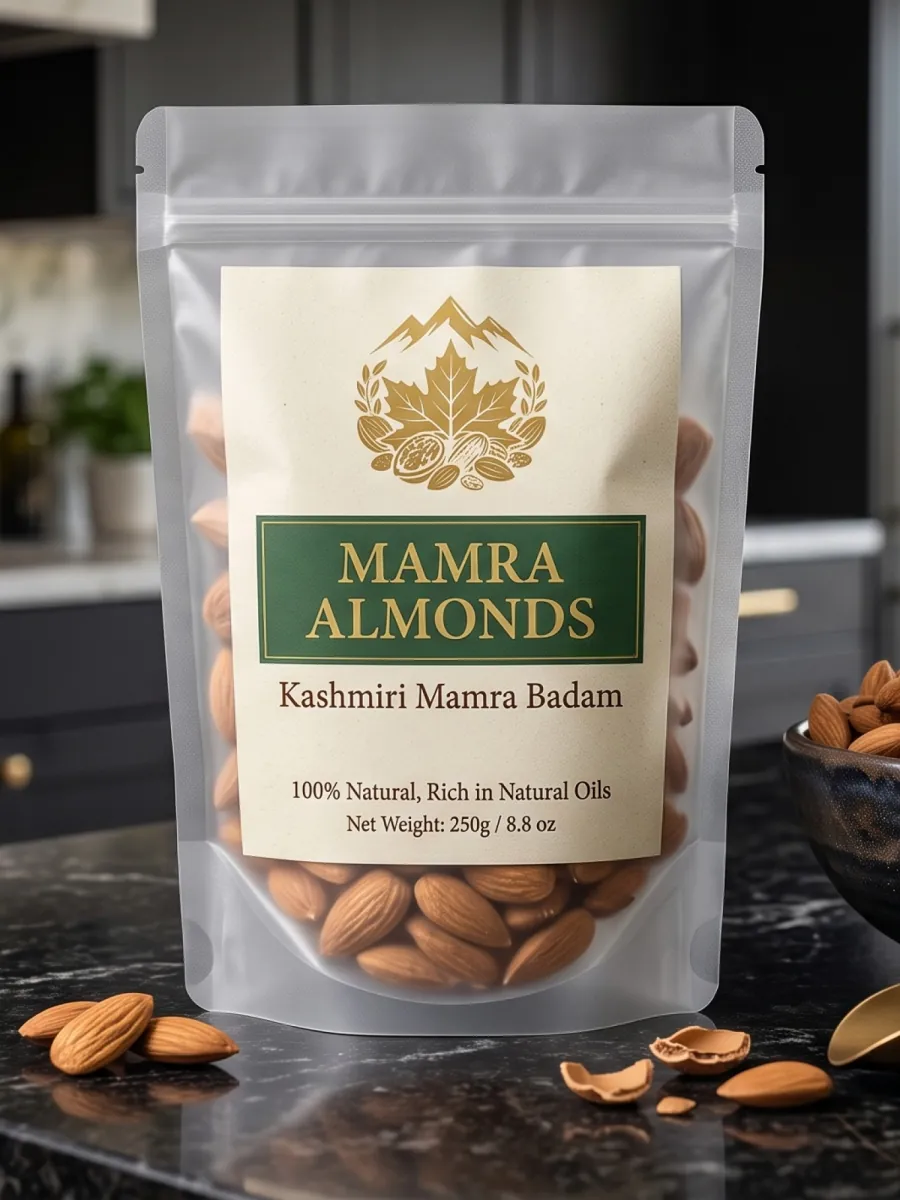
Valley Origin does not sell cashews, and we will not suggest otherwise. Our hero product is Kashmiri Mamra Badam (almond). We also sell walnut halves (akhrot) and salted pistachios (pista).
We are a family business that began in Kashmir in 1975. Our Mamra Badam is Grade A, hand-graded and hand-inspected, with no additives, no preservatives and no artificial coating. We write about cashew rates because the same questions protect you with any dry fruit: which grade, how fresh, and what weight. You can read our story to see how we work.
Frequently asked questions about cashew price per kg in India
What is the cashew price per kg in India today?
We could not open a source that gives a current rupee retail or wholesale range, so we do not quote one. Trade quotes on 15 October 2026 put New Delhi W320 at EUR 7.15 per kg for export. Check a local dealer for a rupee rate.
Retail rates add packing, margin and GST on top of any export figure.
Why did kaju prices go up?
Several things push rates up: weak African harvests, import disruption, a weak rupee and firm demand. A May 2026 trade report links raw nut shortfalls to kernel prices within four to six weeks. Rates can also ease when supply improves.
Prices were described as sideways and quality-sensitive in mid-October 2026.
Is a more expensive cashew always better?
No. A higher price can mean a bigger grade, whole kernels or more careful sorting, not better taste. A fresh W320 can taste better than a stale W180. Judge by grade, smell and packing date.
Pay for size only when it shows, as in a gift. Our cashew grades guide matches each grade to a use.
Which is cheaper per kg, W320 or W450?
W450 is cheaper. In the 15 October 2026 export quotes, New Delhi W450 was EUR 6.45 against EUR 7.15 for W320, about 10% lower. The kernels are smaller, which suits cooking and grinding.
The percentage is our arithmetic from the quoted prices.
Are cashews safe for everyone?
Cashew is a tree nut, and tree nut allergy can be serious. If anyone in your home has a nut allergy, is pregnant, or is managing a medical condition, check with your doctor before adding cashews.
Otherwise they are an ordinary food. Buy fresh and store them airtight and cool.
Compare grade, form and weight, not the headline rate
Kaju rates move with African harvests, the rupee, grade and shape. A single price tells you little. The grade, the form, the packing date and the net weight tell you far more.
Ask the five questions, divide by kilograms and compare on the same day. If you want almonds with a clear Kashmiri origin, see the Mamra Badam page for current sizes and prices, or browse the full range of products.