Kaju Goes Soft or Rancid Because of Air, Heat and Damp
You open the tin and the kaju bends instead of snapping. Or it smells faintly sharp, like old paint. Both problems come from storage, not from a “bad batch”. Knowing how to store cashews in India means handling three things: heat, humidity and air.
Cashews are rich in oil and very dry inside. That makes them crisp, and it also makes them easy to spoil. Warm kitchens speed up rancidity. Monsoon air pushes moisture into the nut.
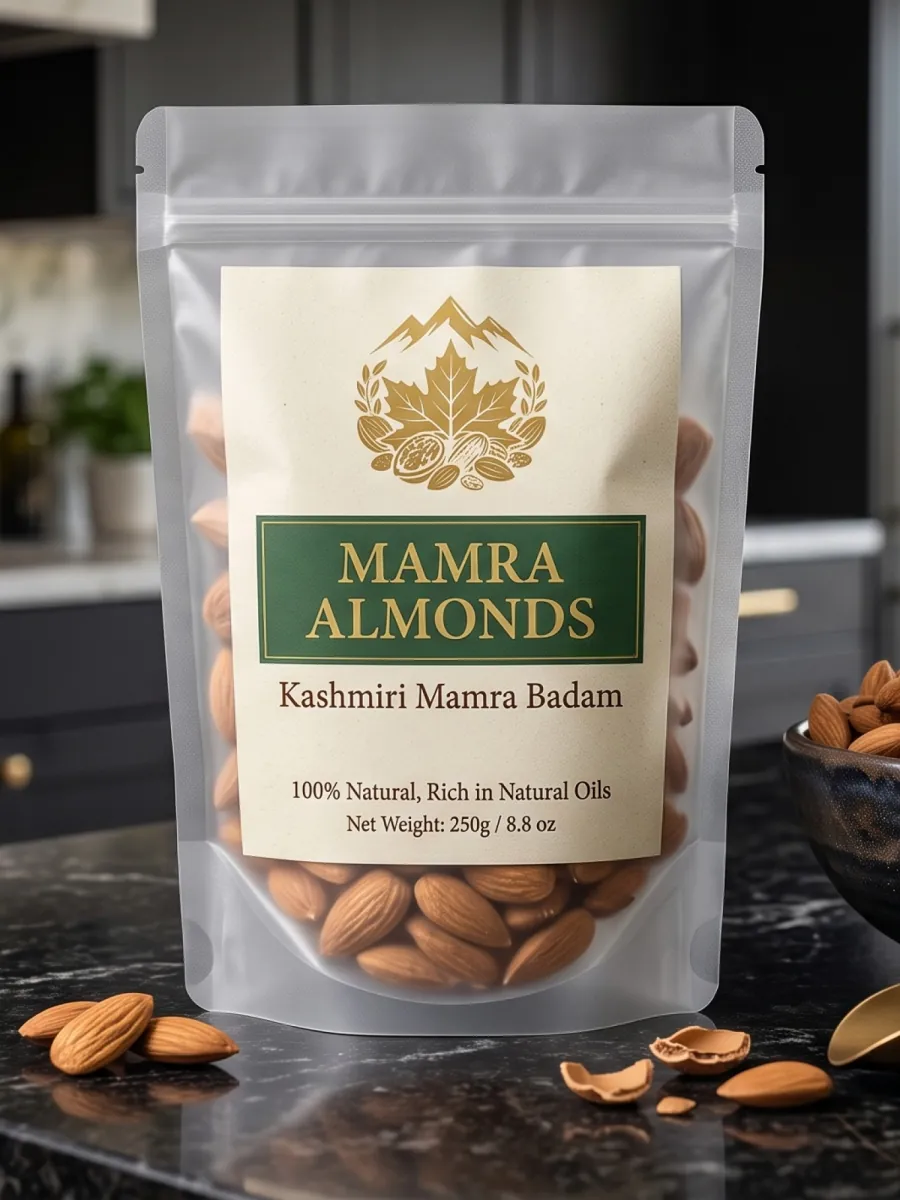
This guide gives you the steps, the shelf life by method, and the signs of a bad cashew. The same rules work for most dry fruit, including Kashmiri Mamra Badam.
How Do You Store Cashews So They Stay Fresh?
Store cashews in a clean, dry, airtight glass jar, away from heat, light and moisture. Keep it in a cool cupboard for a few weeks, in the fridge for months, or in the freezer for a year or more. Open the jar only briefly, with a dry spoon.
Follow these steps in order.
- Check them first. Smell a few kernels. Fresh kaju smells mild and sweet. If they are already stale, no container will fix that.
- Cool them down. If the packet sat in a hot room or a warm delivery van, let it come to room temperature in a shaded spot. Do not leave it in the sun.
- Pick an airtight container. A glass jar with a rubber seal is best. Steel tins with tight lids also work. Avoid loose lids and the thin plastic bag the nuts came in.
- Dry the jar fully. Wash it, then dry it completely, even if that takes an hour in the air. A damp jar is the quickest way to spoil kaju.
- Fill it well. A jar that is mostly full holds less air. Use a smaller jar for the last handful.
- Choose the place. Pick a dark, cool shelf away from the stove, the fridge back panel and the window. In summer or monsoon, go straight to the fridge.
- Portion it for the fridge or freezer. Split the stock into small jars or freezer bags. Press out the air. Label with the date.
- Use a dry spoon. Wet fingers and wet spoons carry water into the jar.
Move fridge or freezer containers to the counter for 20 to 30 minutes before opening. Cold nuts sweat in warm air, and that water is what makes them soft.
Why Does Storage Matter for Cashews?
Cashews go wrong in two ways. Their oils slowly oxidise and turn rancid, which brings a sharp, bitter taste. They also take up moisture from humid air, which makes them soft and lets mould and insects in. Heat speeds up both problems.
Rancidity is chemistry. Oils react with oxygen, and warmth speeds the reaction. A published study on cashew kernels measured the usual markers of oil breakdown, peroxide value and free fatty acids. After six months of storage at room conditions, treated kernels were still within the limits for acceptable quality. Nuts stored cleanly can last.
Insects are the other risk. In the same study, untreated cashews were heavily infested within one month. That is a useful warning for an open bag in a humid Indian kitchen. Tiny holes or fine powder in the jar mean pests.
Moisture matters most in monsoon. Kaju sits at very low moisture, about 2.5 per cent in that study. Damp air raises it, and the crunch goes first.
How Long Do Cashews Last?
Whole raw cashews last about one to six months in a cool cupboard, six to twelve months in the fridge, and a year or more in the freezer. Sources differ, and Indian heat shortens the cupboard figure. When in doubt, trust your nose.
Published guides do not agree. One food-storage site says opened cashews keep about a month in the pantry, four to six months in the fridge and nine to twelve months in the freezer. A health publication gives up to six months in a cool pantry, six to twelve in the fridge and over a year in the freezer.
The gap comes from temperature. The six-month cupboard figure assumes about 20 degrees Celsius. Many Indian kitchens are 30 degrees or more for months. So plan on the short end.
| Where | Cool months | Summer or monsoon |
|---|---|---|
| Cupboard, airtight jar | 1 to 3 months | Up to 3 to 4 weeks |
| Fridge, airtight jar | 4 to 12 months | 4 to 6 months |
| Freezer, sealed bag | 9 to 12 months or more | 9 to 12 months |
These are planning estimates drawn from the two ranges above. They are not lab results. Raw whole cashews outlast chopped, roasted or salted ones, which have more surface and added salt that attracts water.
Should Cashews Go in the Fridge?
Yes, in most Indian homes. If you will not finish a packet within three or four weeks, or if it is summer or monsoon, the fridge is safer than a cupboard. Use a sealed jar so the nuts do not pick up smells or condensation.
A cold, steady shelf slows rancidity. It also keeps insects away. Put the jar on a main shelf, not the door, which warms every time you open it.
The fridge has two risks. Cashews pick up odours easily, so a loose lid gives you kaju that tastes of last night’s sabzi. And moving a cold jar into warm air makes water form on the nuts. Let the jar warm up before you open it.
For a small packet used daily, a cool cupboard is fine in winter. Keep a week’s worth in a small jar and the rest in the fridge.
Why Have My Kaju Gone Soft?
Kaju goes soft because it has absorbed moisture from the air. This is common in monsoon and coastal cities, and it happens when the jar is opened often or sealed loosely. Soft kaju is usually safe if it smells fine and has no mould.
Soft is not the same as spoiled. A kernel that bends but smells mild and sweet has only lost its crunch. A kernel that smells sour, looks fuzzy or has dark spots is a different matter, covered below.
If you are unsure, read the full smell test for pistachios. The same cues apply to cashews. Our guide on how to store walnuts in India covers the other oil-rich nut, which is even more sensitive to heat.
What Mistakes Do Most People Make?
The common mistakes are leaving the packet open, using a damp spoon, storing near the stove, buying too much at once, and mixing old and new stock. Each is easy to fix with a dry jar, small batches and the fridge.
Leaving the bag folded. A rolled-down pouch lets air and humid air in. Move the kaju to a sealed jar the day it arrives.
Dipping in with wet hands. One damp finger can start mould. Keep a dedicated dry spoon next to the jar.
Storing above or beside the stove. The cupboard over the hob is the warmest shelf in the house. Use a low, dark shelf instead.
Buying a year’s stock for a festival. Nuts bought in bulk for Diwali often sit through summer. Buy for two or three months, or freeze the extra in small bags.
Topping up an old jar. New kaju poured over old kaju takes on the old stock’s age. Finish the jar, wash it, dry it, and start fresh.
How Do You Tell Rancid Cashews?
Rancid cashews smell bitter, sharp or like old paint, and taste harsh or soapy. They may look dark, blotchy or shrivelled. Throw away any cashew with mould. If the smell is off, do not eat them, even if they look fine.
Smell first, because looks can mislead. Fresh kaju is ivory and smells mild. A health guide lists the warning signs as a bitter or chemical smell, dark or blotchy colour, shrivelled texture and any mould. It also says to throw them out when in doubt.
Colour alone proves little. Our guide to identifying good quality cashew nuts explains why a white kernel can still be stale, and what to ask a seller.
Can You Make Soft Cashews Crisp Again?
Often, yes, if they are only soft and smell fine. Spread them on a dry pan or tray and warm them gently on low heat for a few minutes, stirring, then cool them fully before storing. Rancid nuts cannot be saved.
Do not toast them dark. A few minutes at low heat drives off surface moisture. Let them cool completely on a plate before they go back in the jar, or steam will form inside it.
This fixes dampness, not age. Warming cannot undo rancid oil. If the kernels smelled sharp before, discard them.
Where Valley Origin Fits In
Cashews grow on the coast, in Kerala, Goa and Maharashtra, not in Kashmir. Valley Origin does not sell them at present, and you can see what is in the range on the products page.
What carries over is the habit. Valley Origin is a family business that began in Kashmir in 1975 and sources dry fruit direct from growers. Our story explains why we care about freshness. The same airtight, cool and dry rules protect Mamra Badam, walnuts and anything else rich in oil.
Frequently Asked Questions About Storing Cashews
How long do cashews last in the fridge?
Raw whole cashews last about four to twelve months in a sealed jar in the fridge, depending on the guide. Opened and salted ones sit at the lower end. Always smell them before use, whatever the date on the pack says.
Printed dates are quality guides, not safety limits. Go by smell, taste and appearance.
Can I store cashews in a steel dabba?
Yes, if the lid is tight and the dabba is completely dry and free of strong smells. Steel blocks light, which helps. Avoid containers that held pickle, masala or ghee, because kaju absorbs smells quickly.
Wash the dabba, dry it fully and air it before filling.
Should I refrigerate roasted or salted cashews?
Yes, in summer and monsoon. Roasted and salted cashews spoil and soften faster than raw ones, so use a sealed jar in the fridge and finish them within a few weeks. Salt attracts water from humid air.
Raw whole cashews keep best of all.
Is it safe to eat cashews that smell slightly off?
No. A bitter, sharp or paint-like smell means the oils have oxidised, and mould means the batch is unsafe. Discard them. If anyone eating has a nut allergy, a medical condition or is pregnant, ask your doctor about diet.
One rancid kernel can spoil a handful, so smell before you use a large quantity.
Can I freeze cashews?
Yes. Freeze them in small, sealed freezer bags with the air pressed out. They keep a year or more. Take out only what you need, let the bag warm up unopened, and do not refreeze thawed nuts.
Label the bag with the date, so the oldest stock goes first.
Dry, Cool and Sealed Is the Whole Rule
Kaju does not need clever tricks. It needs a dry jar, a cool shelf and a lid that closes. In Indian summer and monsoon, move it to the fridge and buy only what you will finish.
Check by smell before every big batch, and throw out anything bitter or mouldy. Handled this way, a packet stays crisp for months, not weeks.
Dry fruit that starts fresh is easier to keep fresh. See the Valley Origin range for what we sell direct from Kashmiri growers, with prices on the product pages.