A Lohri dry fruit gift works best next to the festival’s own foods
You are choosing a Lohri dry fruit gift for family, for the neighbours who share the bonfire and perhaps for clients. Lohri already has its own foods, so a plain box of nuts can feel out of place. The better idea is to fit dry fruits around what people expect to eat that evening.
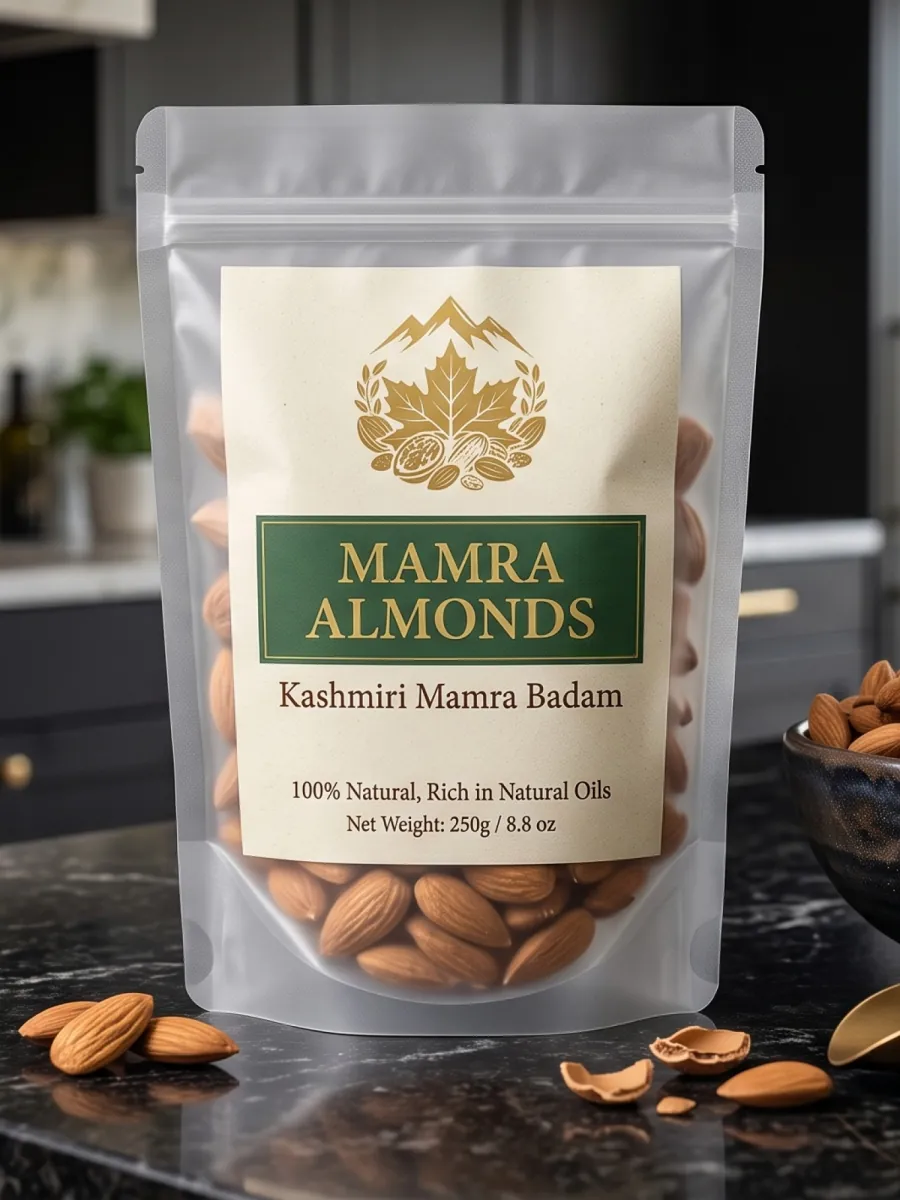
Lohri falls in the cold weeks of January, when nuts are eaten daily anyway. Most gift lists online jump straight to hampers with candles and chocolates. This guide is for families and individual gift buyers, with a short section for small business orders. If almonds are on your list, see Kashmiri Mamra Badam for the standard to hold any seller to.
What do you give for Lohri?
Give something that belongs to the evening: sweets such as revri and gajak, and a pack of plain dry fruits. Clothes and sweets are the old custom for married women in the family. Nuts, sealed and equal in weight, suit neighbours and colleagues.
Lohri 2027 falls on Wednesday, 13 January, according to a Lohri festival calendar. Confirm the date for your city before you plan.
The same page says clothes, sweets, revdis, phaladis and other gifts are sent to married women on this occasion. That is the traditional gift circle: sisters, daughters and daughters-in-law. For everyone else, a food gift is the easy choice, because it needs no size, no colour and no matching.
Think in three circles. Close family gets the best gift. Neighbours and friends get a modest, equal one. Colleagues and clients get a plain, neat pack with no festival-specific extras that might not suit them.
Are dry fruits a good Lohri gift?
Yes, with one honest note. Dry fruits are not the centre of Lohri, til and jaggery are. But nuts keep for weeks, suit most diets and fit a cold-weather festival, so they make a safe gift beside sweets that are finished in a day or two.
Lohri is a harvest festival. A list of traditional Lohri dishes names til ki chikki, gajak and panjiri, which is made with wheat flour, dry fruits and ghee. Dry fruits are part of the food, even when they are not the headline.
The practical case is simple. Mithai is eaten within days. A sealed pack of nuts can sit in the kitchen for weeks, and the family can share it slowly. That suits a house that has received six boxes of sweets in one evening.
The other side: if the recipient is diabetic or avoids sweets, nuts are the kinder gift. If they eat only home-made food, a gift of ready sweets may not be used. Ask if you are unsure.
What goes with dry fruits in a Lohri gift?
Pair a pack of plain nuts with a small portion of revri or gajak, sesame and jaggery sweets, and perhaps roasted peanuts. This keeps the tradition on the table while adding something that stays fresh for longer than the sweets.
Gajak is jaggery set with peanuts or sesame seeds. Revri and til ki chikki are close cousins, made with sesame and jaggery. Roasted peanuts and popcorn are thrown into the bonfire and shared. A guide to Lohri foods lists rewari, gajak, peanuts, til and popcorn together.
A balanced gift might hold:
- A plain firm nut, such as almonds or walnut halves, sealed.
- A small portion of gajak or revri.
- A handful of roasted peanuts or makhana if you like.
Keep the sweet portion small. Sesame and jaggery sweets can soften in damp weather, so buy them close to the day. The nut pack is the part that lasts.
Which dry fruits suit which person?
Choose almonds for elders and close family, walnut halves for anyone who likes baking or a lighter snack, and a firm, plain pack for colleagues and clients. Skip coated or flavoured nuts for formal gifts.
This table is a planning guide, not a price list and not a pack list.
| Who you are gifting | A sensible choice | What to watch |
|---|---|---|
| Parents, in-laws, elders | A larger pack of premium almonds | Grade and packing date |
| Sisters, daughters, married women in the family | Nuts with a sweet portion beside them | Keep the sweets fresh |
| Close neighbours | One plain nut in a sealed pack | Equal weight for all |
| Colleagues | The same pack for everyone | No flavoured or coated nuts |
| Clients | A single, neat, premium nut | Plain, equal and sealed |
Almonds suit Lohri because they are a winter staple. Our guide to Mamra Badam against Gurbandi almonds will help you pick a variety. Walnuts are a good second nut: the Kashmiri Walnut Halves from Valley Origin are shelled kernels, which means no cracking at the party.
How much should you give each family?
Plan about 100 g of one nut for a neighbour or colleague, 250 g for close family and friends, and 500 g for elders. This is a rule of thumb, not a standard. Count households, not heads, if one pack goes to each home.
Say you have 10 neighbours, 6 relatives and 3 elders on your list. That is 10 packs of 100 g, 6 packs of 250 g and 3 packs of 500 g, which is 4 kg in total. Add two spare packs for people you forgot, and the total moves to about 4.4 kg.
Count the list first, then divide the budget. Buying first and rationing later is how one neighbour ends up with a smaller pack than the next door.
Weigh the nuts, not the box. A box marked 250 g may include the packing. Our guide to choosing a dry fruit gift box lists the checks for net weight, seal and freshness.
What separates a premium gift from a cheap one?
A premium gift has plain, graded nuts, a clear packing date, a sealed pack and an honest net weight. A cheap one hides small or broken nuts under a large box and bright wrapping. Judge the nuts first and the box last.
Open one pack before you order many. Fresh almonds smell mild and sweet, snap cleanly and look evenly coloured. A sharp, paint-like smell or a bitter taste means the oils have turned.
Origin and grade are worth asking about. Valley Origin’s Mamra Badam is grown in Kashmir above 1,800 metres, and it is Grade A, hand-graded and hand-inspected. Our walnut halves are superior grade and inspected by hand. Ask any other seller what grade they sell, and where it was grown.
Packaging should protect the nuts and nothing else. For a formal gift to a client, a clean, simple pack with a card says more than glitter.
For small businesses: how do you plan a Lohri order?
Fix the headcount and the budget per person, order several weeks before 13 January, ask for a GST invoice, and list every delivery address in one sheet. Confirm timelines, personalisation and minimum orders with your seller, since they vary.
This section is for an HR or admin person, an office manager or a founder. It is general guidance, not a description of any one seller.
Say you are buying for 50 employees and 12 clients. Give staff one equal pack. Give clients a slightly better one, with a card. Keep the difference small, so nobody feels left out.
- Timeline: Order well before the festival and allow extra days for delivery to other cities.
- GST invoice: Ask for it at the start, and give the company name and GSTIN exactly.
- Many addresses: Send one spreadsheet with names, addresses and phone numbers. Check pincodes.
- Personalisation: A printed card is easy. Anything on the pack itself needs more time, so ask first.
For a quote, share your headcount, budget and date through our contact page.
What mistakes should you avoid with Lohri gifts?
The common mistakes are ordering late, giving uneven gifts, choosing by the box, buying coated or soft fruit and forgetting allergies. Each has a simple fix: order early, set one base gift, check net weight, keep to plain nuts and add a contents card.
Ordering late. Festive orders pile up near the date. Order early and leave a few days to check the packs.
Uneven gifts. Colleagues and neighbours compare. Give everyone the same base gift.
Choosing by the box. A large box can hold a small amount of nuts. Compare net weights.
Coated or soft fruit. Sugar-coated nuts and soft figs take up moisture. Plain raw nuts hold up better.
Forgetting allergies. Peanuts and tree nuts are common allergens. Add one line on the card naming what is inside, so an allergic guest can pass it on.
Tell the recipient how to keep the nuts. A cool, dry cupboard is enough in winter, and an airtight jar helps once opened. Our storage guide for Mamra Badam explains why heat and air turn nut oils stale.
How does Valley Origin handle gifting orders?
Valley Origin supplies dry fruits for festive, wedding and corporate gifting. Enquiries go through the contact page, where you can share your list, budget and date and ask for a quote. We do not publish packs or prices here.
Valley Origin is a family business that began in Kashmir in 1975. It sources direct from growers, with no middlemen, and ships across India. Free shipping applies on orders above Rs 999.
The signature product is Kashmiri Mamra Badam, in 250 g, 500 g, 1 kg and 2 kg packs, with no additives, preservatives or artificial coating. The walnut halves come from Srinagar, Kashmir, with no preservatives or coating. See current prices, or read our story to learn how we source.
Frequently asked questions about Lohri dry fruit gifts
What is the best dry fruit to gift for Lohri?
Almonds are the safest single choice, followed by walnut halves. They are firm, familiar and keep well in winter. The best pick is the nut your recipient already eats, bought fresh with a clear packing date and a sealed pack.
Premium almonds suit elders and close family. Plain, equal packs suit a wider list.
Can you gift dry fruits along with revri and gajak?
Yes. Revri and gajak are made from sesame, jaggery and sometimes peanuts, so they sit well beside plain nuts. Keep the sweet portion small and buy it close to the day, because jaggery sweets soften and spoil faster than nuts.
Seal the two separately so the nuts do not take up moisture from the sweets.
How many packs should you buy?
Count every household you plan to gift, add two or three spare packs, and plan one larger pack for each elder. A few spares cost little and save an awkward moment on the day.
Write the list first, then divide the budget.
Is it fine to gift nuts to someone with diabetes or a nut allergy?
Skip nuts for anyone with a nut or peanut allergy and choose a non-food gift. For diabetes, plain unsalted nuts are the milder choice and sweets are best avoided, but check with the person or their doctor first.
If you are unsure, ask the person or choose something else.
How do you keep nuts fresh in a gift?
Buy sealed packs close to the day, store them in a cool, dry cupboard away from the stove, and move them to an airtight jar once opened. Ask your seller for the packing date and the expiry date on the label.
Our guide to storing walnuts in India explains the same rules for akhrot.
Keep the gift plain, equal and fresh
A good Lohri dry fruit gift is simple. Plain, sealed nuts, a small portion of the festival’s own sweets, and the same quality for everyone on the list. Pick one or two nuts, check the packing date and order before the last week.
To see the quality Valley Origin holds itself to, start with Kashmiri Mamra Badam. When you know your list, your budget and your date, contact us for a gifting quote.