Kahwa is a short brew, and the order matters
A good Kashmiri kahwa recipe is simple. It is green tea, a few whole spices, saffron and almonds. The skill is in the order and the timing, not in a long ingredient list.
Online recipes disagree on how long to simmer the spices and how long to steep the tea. They also disagree on whether saffron and almonds go in the pot or the cup. This guide compares them, picks a method and explains why.
You will get quantities for two cups, clear steps, and the mistakes that make kahwa bitter or dull. Almonds are the part we know best, so we also cover which ones suit the cup. You can see our Mamra Badam on its product page. Valley Origin does not sell saffron or green tea.
What is Kashmiri kahwa?
Kahwa (also spelt kahwah or kehwa) is a traditional Kashmiri green tea made with whole spices and saffron. It is served without milk, often topped with crushed almonds or walnuts, and is common after big family meals and for guests.
Wikipedia’s entry on kahwah says it is widely believed to have started in the Kashmir Valley. It also says the exact origins are unclear. The Kushan-era story, in the first and second centuries AD, is repeated often but is a belief, not settled history.
What is better documented is the way it is served. The same entry says kahwah is traditionally made in a copper samovar, a kettle with a central chamber of live coals. Saffron is added for special guests, and the cups are small and shallow.
Most homes today use an ordinary pot. The result is close enough, as long as you respect the short brewing time.
What do you need for kahwa?
For two cups you need about 2 cups of water, 2 to 3 green cardamom pods, a 2 inch cinnamon stick, 1 teaspoon of green tea, a few saffron strands per cup, and 4 to 6 almonds. Sugar or honey is optional.
Here is the base list for two small cups:
- 2 cups (about 500 ml) water
- 2 to 3 green cardamom (elaichi) pods, lightly crushed
- 1 piece of cinnamon (dalchini), about 2 inches
- 2 cloves (laung), optional
- 1 teaspoon green tea leaves, or 1 tea bag
- 3 to 4 saffron (kesar) strands per cup
- 4 to 6 almonds (badam), crushed or sliced
- Sugar or honey to taste, optional
- A few dried rose petals, optional
These amounts sit between the sources. Cook with Manali uses 2 cups of water, 2 cardamom pods, a 2 inch cinnamon piece and four almonds for two cups. The Food Network Kitchen version makes 2 cups from 3 cups of water, 10 cardamom pods and 3 tablespoons of chopped almonds.
How do you make Kashmiri kahwa?
Boil crushed spices in water, add green tea off the heat, steep for about 2 minutes, then strain over saffron and crushed almonds in the cup. The whole brew takes about 10 to 15 minutes, including the saffron steep.
- Soak the saffron first. Put 3 to 4 strands per cup into the empty cup with a spoonful of hot water. Leave it while you make the base.
- Crush the cardamom and cinnamon (and cloves, if using) lightly in a mortar. You want them cracked, not powdered.
- Add the water and spices to a small pot. Bring to a boil on medium heat.
- Let the spices boil gently for 4 to 8 minutes, depending on how strong you like it. Add sugar now, if using.
- Turn off the heat. Add the green tea and cover the pot.
- Steep for about 2 minutes. Do not leave it much longer.
- Put the crushed almonds in the cups, on top of the saffron.
- Strain the hot tea into the cups. Stir once, wait a minute, and sip.
If you want honey, stir it into the cup after straining, once the tea has cooled a little.
What do most kahwa recipes get wrong?
The common errors are boiling the tea leaves, steeping too long, boiling the saffron, and adding honey to scalding tea. Each one makes the cup bitter, flat or harsh. All four are easy to avoid by changing the order of steps.
Boiling the tea leaves. Recipes differ on the spice time, but the better ones add green tea only after the heat is off. Cook with Manali says not to boil the pot once the leaves go in. Boiling green tea tends to make it bitter.
Steeping too long. The two recipes we opened steep for 1.5 to 2 minutes. Green tea left longer than that usually turns bitter, so keep to the clock.
Boiling the saffron. Saffron needs warm water and time, not a rolling boil. Both Food Network and Cook with Manali put it in the cup, not the pot. For amounts and blooming, see our guide on how many kesar strands to use.
Honey or sugar? Sources disagree. Wikipedia says kahwah is typically served with sugar or honey. Food Network makes sugar optional and says to skip honey. Neither is wrong. Sweeten to taste, and add honey late.
Should saffron and almonds go in the pot or the cup?
Put both in the cup. The recipes we compared mostly add saffron and almonds to the serving cup and pour the strained tea over them. This keeps the saffron colour bright, and the almonds stay crisp instead of going soft.
Both Food Network and Cook with Manali divide the saffron and almonds between the cups, then strain the tea over them. Wikipedia describes crushed nuts as a topping, usually almonds or walnuts.
Cooking the almonds in the pot has no clear benefit. They soften, cloud the tea and can clog the strainer. In the cup, they release a little flavour into the hot tea and still give you something to bite into.
If you like a stronger saffron note, steep the strands for 10 to 15 minutes in a spoonful of hot water, then add the liquid and the strands together.
Which almonds suit kahwa, and does quality show?
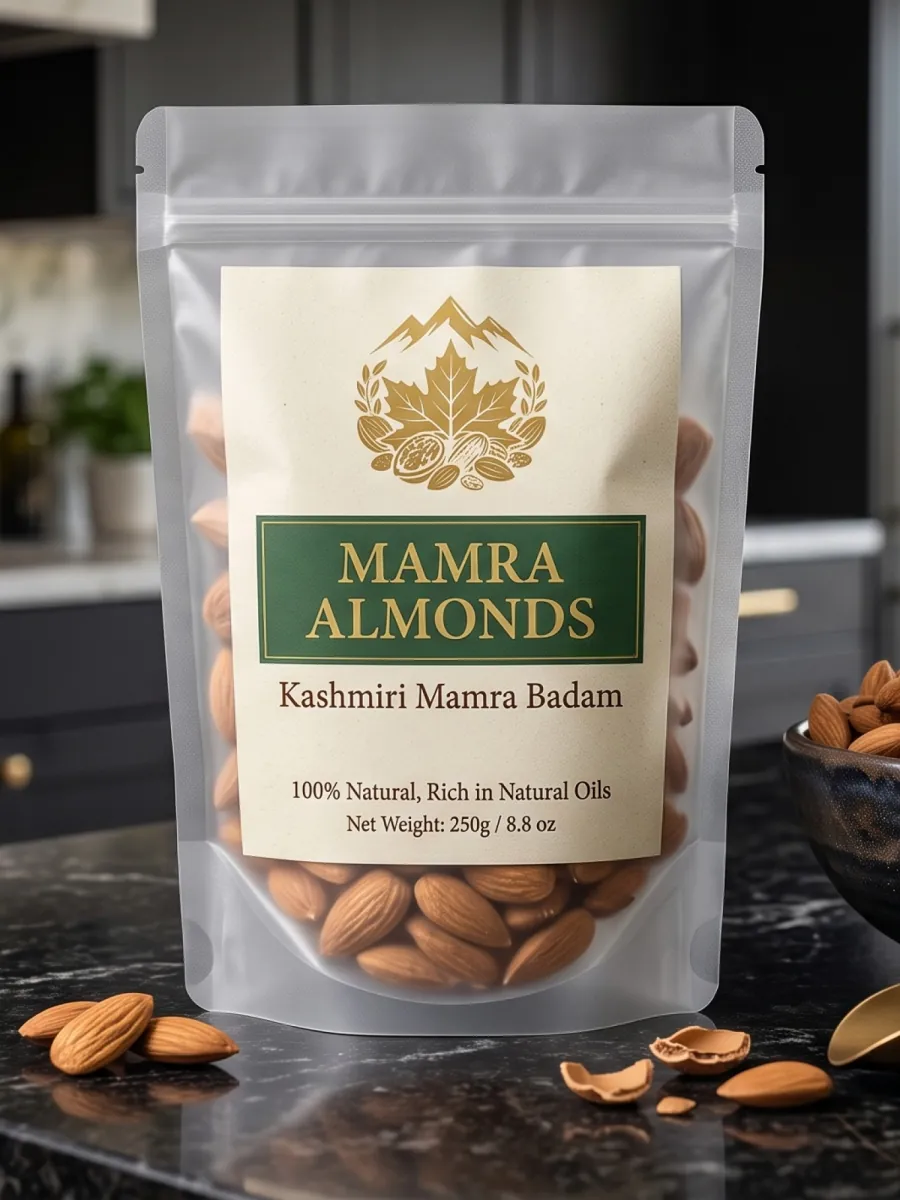
Plain, fresh, unsalted almonds suit kahwa best. Quality shows because the cup is simple: stale or rancid almonds add a sharp, oily taint that has nowhere to hide. Mamra Badam is one good choice, though any fresh almond will work.
Use raw, unsalted almonds. Do not use roasted, salted or flavoured ones, which fight the spices. You can use them whole, crushed or sliced. Crushing just before serving keeps the oils fresh.
Honesty matters here. A mild green tea with cardamom and cinnamon is not a test of an almond’s grade. Any fresh badam gives a good cup. Where the almond helps is the taste you get when you bite into it at the end.
Valley Origin’s Mamra Badam is grown in Kashmir at altitudes above 1,800 metres. It is Grade A, hand-graded and hand-inspected, with no additives, preservatives or coating. It suits a Kashmiri drink. You can read more about what makes Mamra Badam different before you buy.
If anyone drinking the kahwa has a nut allergy, skip the almonds and ask their doctor about the rest.
Frequently asked questions about Kashmiri kahwa
How long should you simmer the spices for kahwa?
About 4 to 8 minutes. Sources differ: Food Network reduces 3 cups of water to 2 over about 8 minutes, while Cook with Manali only brings the spiced water to a gentle boil. Shorter gives a lighter cup, longer a stronger one.
Pick the time by taste. Start with 4 minutes the first time, which is our suggestion, not a tested standard. Add a minute or two if the cinnamon and cardamom are faint. Always remove the pot from the heat before adding the green tea.
Can you add milk to kahwa?
Traditionally no. Kahwa is served without milk. Wikipedia notes that milk is generally reserved for the elderly or the sick, though it cites no source for this. Most recipes skip milk, and so should you if you want the classic cup.
If you prefer a creamy cup, add a small splash at the end. Just know it will no longer taste like the traditional drink.
Can you add honey or sugar to kahwa?
Yes, both are used. Wikipedia says kahwah is typically served with sugar or honey. Food Network makes sugar optional and says to skip honey. Add sugar to the pot, or stir honey into the cup once the tea is warm, not scalding.
Taste before sweetening. The spices and saffron already give a mild sweetness, and many people find kahwa better with little or none. If anyone has diabetes, check with their doctor about sugar and honey.
Can you make kahwa without green tea?
Yes. Wikipedia notes that some kahwah varieties are herbal infusions with no green tea leaves. Make the spice base the same way, strain it over saffron and almonds, and skip the tea step. The cup will be lighter and caffeine free.
Skipping the green tea also removes the risk of bitterness from over-steeping. Check any herbs you add are safe for the people drinking.
How do you store the kahwa spice mix?
Keep whole spices in an airtight jar in a cool, dark cupboard, and the almonds in a separate airtight container. Brew fresh each time. Do not store brewed kahwa for later, as the colour and aroma fade quickly.
Do not pre-grind the spices, because whole cardamom and cinnamon hold their aroma much longer. For almonds, follow our guide on how to store Mamra Badam. Our notes on soaking and peeling almonds cover another way to use them.
A short brew, a few good ingredients
Kahwa rewards care more than quantity. Boil the spices briefly, add the tea off the heat, steep for two minutes and pour over saffron and almonds in the cup. That is the whole method.
The simple recipe also makes the quality of each ingredient obvious. Fresh whole spices, real saffron and a clean-tasting almond all show. If you want to check your saffron first, read how to identify real Kashmiri saffron.
For the almonds, see current prices and sizes for Valley Origin Mamra Badam. Grown in Kashmir and sourced direct from growers, it is a fitting finish for a Kashmiri cup.