The bowl on the counter every morning
Many Indian homes soak a handful of badam (almonds) at night and peel them at breakfast. It is a habit passed down from parents and grandparents. So should you soak almonds and peel them, or is it effort for nothing?
The honest answer has two halves. Soaking and peeling change the texture and taste of the nut. They do not change its nutrition as much as the internet claims.
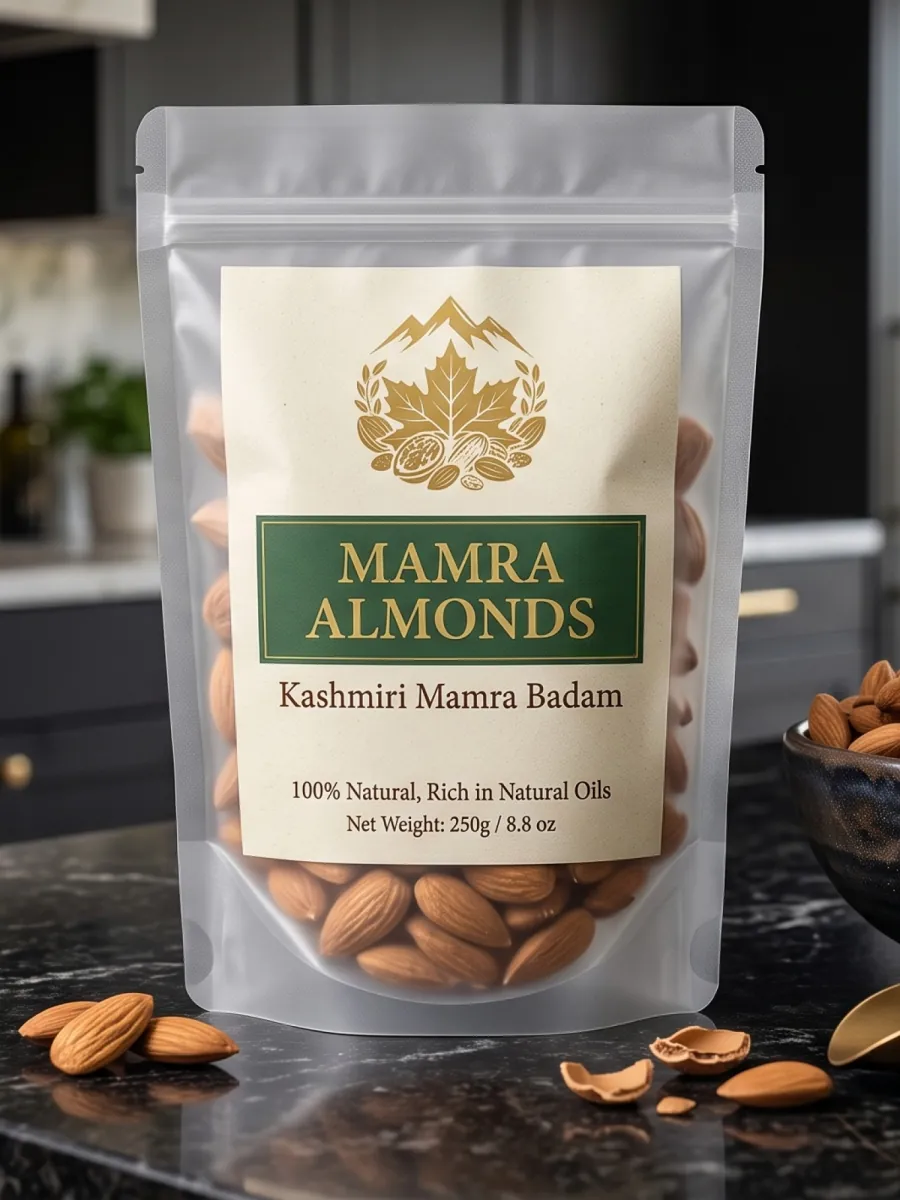
This guide shows what published research found, how to soak almonds properly, and when plain raw almonds are the better choice. If you are choosing almonds to begin with, our Kashmiri Mamra Badam is the product page to see.
Is soaking almonds necessary?
No. Soaking is not necessary for almonds to be good food. Raw, dry almonds are nutritious as they are. Soaking mainly makes them softer, less bitter and easier to peel. Choose it for texture and habit, not because research shows a large nutrition gain.
The popular reason for soaking is phytic acid. This is a natural compound in nuts and seeds that can bind minerals such as iron and zinc in the gut. The claim is that overnight soaking removes it.
The research does not back that claim strongly. A 2020 paper in Food Chemistry tested whole and chopped almonds, hazelnuts, peanuts and walnuts. Phytate levels did not differ between raw and soaked nuts, and soaking slightly lowered mineral content. The authors wrote that the work does not support claims that “activating” nuts improves nutrient bioavailability. The abstract here is from a research library page, not the journal, so the source is listed for a recheck below.
An earlier University of California, Davis test, as reported by the American Council on Science and Health, soaked almonds at room temperature for at least 24 hours. Phytic acid fell by just 4.75 per cent, from 14.71 to 14.01 micromoles per gram.
Soaking has real, smaller effects: a softer bite and a milder taste. If you like that, soak. If you do not, you lose nothing by skipping it.
How do you soak almonds overnight?
Put almonds in a bowl, cover them with clean drinking water and leave them at room temperature for 8 to 12 hours. Drain, rinse, and eat them within a day or refrigerate them. Soaking beyond 12 hours does not add much and risks spoilage.
Follow these steps.
- Measure. Take a small handful, about 8 to 10 almonds, for one person. Soak only what you will eat soon.
- Use a clean bowl. Steel or glass is fine. Wash your hands and the bowl first.
- Cover with water. Use enough drinking water to cover the nuts by about an inch. They swell as they soak.
- Leave at room temperature. Eight to twelve hours is the usual range, which suits an overnight soak. Healthline’s guide gives the same window.
- Drain and rinse. Throw away the soak water. It turns brown from the skin and carries nothing you need.
- Peel if you like. The skin slips off with a light pinch.
- Eat or store. Eat them that morning, or keep them in a sealed box in the fridge.
In a hot Indian summer, a bowl left out for 12 hours can turn sour. In a warm kitchen, soak in the fridge instead or cut the time to 6 to 8 hours.
Should you peel the skin?
Peeling is optional. It gives a smoother, sweeter bite, but the brown skin holds much of the almond’s polyphenols and some of its fibre. If you have no reason to peel, eat the skin. Peel when you want texture, or for a recipe.
The brown skin of an almond is where much of its polyphenol content sits. Polyphenols are plant compounds studied for their antioxidant activity. A 2016 laboratory study in Nutrients simulated digestion and found phenolic acids were released at 68.5 per cent from natural skin and 64.7 per cent from blanched skin. It also found that industrial blanching removes water-soluble compounds.
Two cautions apply. That study was in vitro, meaning in a lab, not in people. And a small 2019 trial of seven healthy older adults found that polyphenols from blanched almond skin raised some plasma markers linked to oxidative stress. The authors named the small size as a limit. This is early evidence. It does not show that eating the skin helps your health.
The practical view is simple. The skin is food, and removing it throws away a little fibre and polyphenols. Peel for taste and texture, and not for nutrition.
When peeling is the better choice: smooth almond paste, badam milk, sweets such as halwa and kheer, or a person who finds the skin bitter or hard to chew.
Does soaking change the nutrients?
Soaking changes them very little. Studies found no meaningful drop in phytate, and some minerals dropped slightly as they leached into the water. Almonds soaked overnight give you about the same nutrition as dry ones, in a softer form.
The 2020 Food Chemistry study found mineral concentrations were lower after soaking, not higher. Water-soluble compounds can move out of the nut and into the water you throw away. Salt in the soak water made this more likely in the nuts they tested.
So do not soak in salt water for nutrition. Plain water is enough if you soak at all.
Some people say soaked almonds are easier to digest. Evidence for this is thin. The soaking studies above measured phytate and minerals, not comfort after eating. If raw almonds sit heavy for you, try soaked ones and see. That is a personal test, not a proven benefit.
Our guide on how many Mamra Badam to eat daily covers portions, and the 10 science-backed Mamra Badam benefits post covers what research links to almonds themselves.
How long do soaked almonds last?
Soaked almonds are fresh produce, not a dry snack. Keep them in a sealed box in the fridge and eat them within a day or two. If you want a crunchy, longer-lasting almond again, dry them fully before storing.
Dry almonds keep for months in a cool, airtight jar. Soaked almonds do not. They hold water, and water invites mould and sourness in Indian weather.
| Form | Where | Rough guide |
|---|---|---|
| Soaked, in water | Room temperature | Up to 12 hours, then drain |
| Soaked and peeled | Fridge, airtight | About 1 to 2 days |
| Soaked, then dried fully | Cool, dry, airtight jar | Store like dry almonds, check smell first |
These are kitchen rules of thumb, not tested shelf-life figures. Use the shorter end in summer and monsoon. For dry almonds, see our guide to storing Mamra Badam.
What mistakes do people make when soaking almonds?
The common mistakes are soaking too long, soaking in warm water, using salt, soaking a large batch for the week and storing wet almonds in a closed steel dabba. Each leads to sour, soft or mouldy nuts, and each has an easy fix.
Soaking for 24 hours or more at room temperature. The extra time adds almost no benefit and invites spoilage. Fix: stop at 12 hours, or use the fridge.
Using hot water to speed up peeling. Hot water gives quick peeling for recipes, but industrial blanching is known to remove water-soluble skin compounds. Fix: use cold water for daily eating.
Soaking a week’s worth at once. Soaked almonds spoil faster than dry ones. Fix: soak what you will eat tomorrow.
Keeping wet almonds in a closed container on the shelf. Trapped damp is the quickest way to mould. Fix: drain well, pat dry and refrigerate.
Expecting a medical result. Soaked almonds are everyday food. Fix: eat them as part of a normal diet and see a doctor for any health concern.
How do you tell soaked almonds have gone bad?
Soaked almonds that smell sour or musty, feel slimy, or show any fuzzy spots have gone bad. Fresh soaked almonds smell mild and nutty. If you doubt a batch, throw it out and start with dry almonds.
Smell the water before you drain it. A sharp, sour or fermented smell means the soak ran too long or too warm.
Look at the nuts. Slime, dark patches or any fuzzy growth mean the batch is finished. Do not wash and eat the rest.
Bitter, paint-like dry almonds are a different problem. That is rancid oil, and our pistachio spoilage guide explains the signs, which are similar in almonds.
Freshness starts at purchase. Our guide to spotting real Mamra Badam lists six checks to run before you buy.
Valley Origin is a family business that began in Kashmir in 1975 and sources direct from growers, with no middlemen. Our almonds are hand-graded and hand-inspected, and carry no additives or artificial coating. Read more about our story.
Frequently asked questions about soaking almonds
How long should almonds soak?
Soak almonds for 8 to 12 hours in plain water at room temperature. That suits an overnight soak and gives a soft, easy-to-peel almond. Longer soaks add little and raise the risk of sourness, so use the fridge if your kitchen is hot.
If you only want easier peeling for a recipe, 6 to 8 hours is often enough. Test one nut: the skin should slide off.
Can you soak almonds and store them?
Only briefly. Soaked almonds keep about one to two days in a sealed box in the fridge. For longer storage, dry them fully first and store them like dry almonds, checking the smell before eating.
Do not leave them in the soak water. Drain and rinse them first.
Is raw badam fine for children?
Raw almonds are a normal food for most families, but whole nuts are not right for every child. Age, chewing ability and allergies all matter. Please check with your doctor or paediatrician before giving almonds to a child, soaked or dry.
The same applies to pregnancy, nut allergy or any medical condition. Soaking does not remove allergens.
Is it better to eat almonds with or without the skin?
Neither is wrong. The skin holds polyphenols and some fibre, so eating it keeps more of the almond. Peeled almonds taste smoother and suit milk, paste and sweets. Pick what you will actually eat each day.
Eating the skin is simpler, and it saves the soaking step entirely.
Do soaked almonds have more benefits than raw almonds?
Research does not show a large difference. Studies found no meaningful drop in phytate after soaking, and some minerals fell slightly. Soaked almonds are softer and milder, but they are not clearly more nutritious than raw ones.
For the nutrient basics, see our Mamra Badam benefits post.
Soak for taste, not for a promise
Soaking and peeling almonds is a fine habit if you enjoy the soft bite and mild taste. It is not a requirement, and research does not show it unlocks much extra nutrition. Raw, unpeeled almonds are a good choice too.
If you do soak, keep it simple. Use plain water, soak for 8 to 12 hours, rinse, and eat them within a day. Peel only when you want the texture.
The best almonds for either habit are fresh ones. You can see current prices and sizes for our Kashmiri Mamra Badam on the product page.