Kesar is costly, so every strand should earn its place
Most people ask how many kesar strands in milk because the spice is expensive and the packs are tiny. Use too few and the milk stays pale. Use too many and you waste money on a flavour that turns harsh.
The honest answer is a range, not one number. Recipes disagree, and the right count depends on your saffron and your taste. What matters more than the count is how you release the colour: bloom the strands first, then add them.
This guide covers amounts, the blooming method, where to add saffron in milk, biryani and kheer, and how to store it. Valley Origin does not sell saffron. You can see what we do sell on our products page.
How many kesar strands go in a glass of milk?
Most recipes use 2 to 3 strands for a small glass of 200 to 250 ml, and up to 8 to 10 for a full cup. Start low with strong, good saffron. Add more only if the colour and flavour are too faint.
Two recipe sources show how wide the range is. One kesar milk guide uses 2 to 3 threads per 200 to 250 ml of warm milk. Another kesar doodh recipe uses 8 to 10 strands for one cup of whole milk.
Both cannot be the rule. The gap comes from saffron strength and from taste. Fresh, deep-red threads colour milk quickly, so a few go a long way. Pale or old threads need more.
| Dish | What recipes use | Recipe type |
|---|---|---|
| Glass of milk (200 to 250 ml) | 2 to 3 strands | Kesar milk guide |
| One cup of milk (250 ml) | 8 to 10 strands | Kesar doodh recipe |
| Layered biryani | “A pinch” in about half a cup of warm milk | Saffron biryani recipe |
These are recipe amounts, not tested standards. Use them as a starting point and adjust by taste.
How do you bloom saffron?
Crush the strands lightly, add a spoonful of warm milk or water that is hot to the touch but not boiling, and leave it for 10 to 15 minutes. The liquid turns deep orange-red. Add the liquid and the strands to your dish.
Blooming means steeping the threads so they give up their colour and aroma. Dropping dry strands straight into a dish releases far less.
- Measure the strands. Use the amount your recipe or the table above suggests.
- Crush them. Press the threads between your fingers or with the back of a spoon.
- Warm the liquid. Heat 1 tablespoon of milk or water until it is warm. One recipe suggests 60 to 70 degrees Celsius. That is hot to the touch, but well short of a boil.
- Pour and wait. Cover the bowl and leave it for 10 to 15 minutes. Some cooks wait 30 to 40 minutes for a deeper colour.
- Add it all. Stir in the liquid and the threads. Do not strain them out.
Saffron gets its colour from crocin, its taste from picrocrocin and its aroma from safranal. A review of saffron chemistry names these three compounds. Blooming gives them time to move into the liquid.
How long should saffron soak?
Soak crushed saffron for 10 to 15 minutes in warm liquid for an everyday dish. Recipes allow 30 to 40 minutes, or longer, for a richer colour. A few minutes can be enough for a biryani, as the milk turns yellow.
The two recipe sources above give 10 to 15 minutes as the standard. One adds that some cooks prefer 30 to 40 minutes. A biryani recipe says to wait only a few minutes until the milk turns yellow.
Use the liquid as your guide, not the clock. When it is a clear orange-red and the threads look pale, the saffron has given what it can. Soaking longer does no harm if the bowl stays covered and out of the sun.
Can you boil saffron?
You can heat saffron in milk, but recipes avoid a rolling boil. Add the bloomed saffron to milk that is hot, then keep it at a gentle simmer or below. Kesar milk needs warmth, not violent heat.
The recipes we read agree on this point. The first guide heats the milk until hot, “not boiling”. The kesar doodh recipe simmers the milk gently for about five minutes after the saffron goes in.
We could not find a tested source on how heat changes saffron’s aroma. So take the advice as kitchen practice. A gentle simmer is common. A hard boil is not.
How do you use saffron in biryani and kheer?
Bloom the saffron in warm milk, then pour it over the dish at the right moment. In biryani, pour it over the layered rice before the pot is sealed. In kheer, stir it in near the end, once the heat is low.
Biryani. A saffron biryani recipe soaks a pinch of threads in about half a cup of warm milk. It pours the milk over the layered rice, meat and onions, then covers the pot and cooks on low heat for 15 to 20 minutes. Pouring it on top lets the colour spread in streaks, which is the look many cooks want.
Kheer. We found no tested source for kheer amounts, so use a method rather than a figure. Bloom the strands as above, and add them when the kheer is nearly done. Taste before you add more. Say you are making kheer for six people: start with the same count you would use for two glasses of milk, then raise it next time if the colour is thin.
Milk and sweets. Kesar doodh is the simplest use. The kesar doodh recipe above also adds 2 to 3 crushed almonds, which is a good place to use a few badam (almonds). Our guide on soaking almonds explains whether to soak and peel them first.
Why do some cooks say 10 strands and others say 2?
Saffron strength varies a lot. Fresh, high-grade threads give strong colour from very few strands, while pale or old threads need more. Taste also differs: a gentle flavour suits some families and a bold one suits others.
Two things sit behind the gap. The first is quality. A pack with only red tips behaves differently from a pack with pale, yellow ends. Our guide to identifying real Kashmiri saffron explains how to judge threads before you buy.
The second is the amount of liquid. Eight strands in a full cup of milk and two strands in a small glass are not so far apart as they look.
A practical rule: use the smaller number on your first try. Saffron is easier to add than to take out.
How do you stop wasting saffron?
Bloom every time, use the liquid and the threads, and measure strands rather than pinching blindly. Keep the tin closed after each use. Spend your saffron where it shows, in milk, rice and kheer, not in a heavily spiced curry.
Saffron is costly for good reason. A study on saffron adulteration notes that about 150,000 stigmas are needed for 1 kg of spice, and that each flower gives only three. All of it is picked by hand.
Here are the common ways cooks waste it:
- Dropping dry threads into hot milk. Less colour comes out. Bloom first.
- Straining out the threads. You lose some colour and flavour. Leave them in.
- Using too many. Too much turns the flavour harsh. Add by the strand.
- Hiding it in strong gravies. Masala drowns the delicate aroma.
- Leaving the lid off. Air and light dull saffron over time. See the next section.
How should you store saffron after opening?
Keep saffron in a small airtight tin or dark glass jar, in a cool, dry cupboard away from the stove, windows and damp. Close it right after each use, and use a dry spoon or clean, dry fingers.
Light, heat, air and moisture are the usual enemies of spices, and saffron is no exception. Humid Indian weather is the biggest problem. A tin left on a shelf above the gas stove or beside a sunny window will lose aroma sooner.
Some storage guides give exact shelf-life and degradation figures for saffron. We could not open those pages, so we do not repeat the numbers. Rely on your nose. Good saffron smells floral and a little like hay. If the smell is faint or musty, the colour in the milk will be weak too.
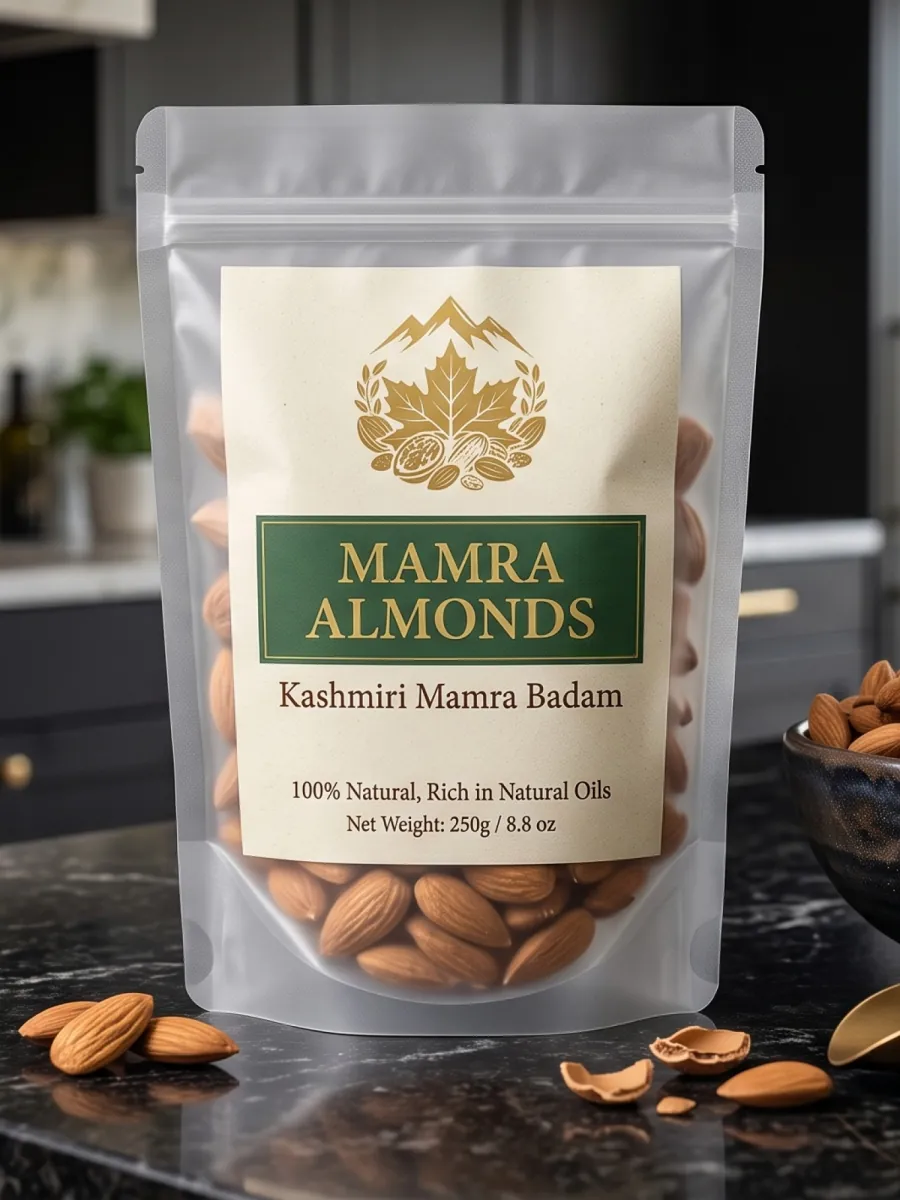
The same airtight habits work for nuts. Our guide to storing Mamra Badam shows them in detail.
Frequently asked questions about using kesar
How many kesar strands go in a glass of milk?
Most recipes use 2 to 3 strands for a small glass and up to 8 to 10 for a full cup. Start with the lower count, bloom the strands in warm milk, and add more next time if the colour is thin.
Good, fresh saffron needs fewer strands. If your threads are pale or old, expect to use more.
How long should saffron soak?
Soak crushed strands for 10 to 15 minutes in warm milk or water. For a deeper colour, recipes allow 30 to 40 minutes. A biryani recipe waits only until the milk turns yellow.
Keep the bowl covered and away from direct sun while it soaks.
Can you boil saffron?
Recipes advise against a rolling boil. Add bloomed saffron to hot milk and keep it at a gentle simmer or below. We found no tested source on how boiling changes aroma, so this is kitchen practice.
If your milk has already boiled, let it cool for a minute before you stir the saffron in.
How much saffron for biryani or kheer?
One biryani recipe uses a pinch of threads in about half a cup of warm milk. For kheer we found no tested figure. Bloom a small amount, add it near the end, taste, and raise the amount next time.
Biryani and kheer vary by family and region, so a method works better than a fixed number.
How do you store saffron after opening?
Use a small airtight tin or dark jar in a cool, dry cupboard away from the stove and windows. Close it after each use and keep it dry. Smell it now and then to check the aroma is still good.
If you are pregnant or have a medical condition, check with your doctor before using saffron beyond the small amounts in normal cooking.
Bloom first, then taste
A good saffron dish comes down to two steps. Bloom the strands in warm liquid, and add them in small amounts until the colour and aroma suit you. The exact count matters less than the method.
Buy the best saffron you can, and ask the seller for origin, grade and harvest year. Valley Origin does not sell saffron. It is a family business from Kashmir that sources dry fruits direct from growers, and its hero product is Kashmiri Mamra Badam. Add a few crushed badam to your next kesar doodh, and see current prices on the product page.