Real kesar is expensive, so fake kesar is common
Learning how to identify real Kashmiri saffron matters because kesar (saffron) is one of the costliest foods you can buy. Every guide online offers the same quick tests. Some of those tests are sensible. Others give you false comfort.
This guide separates the two. It also tells you what no kitchen test can prove, and what to ask a seller before you pay.
Valley Origin does not sell saffron. We write this because buyers ask us, and because the same habits that protect you here apply to every dry fruit. You can see what we do sell in our dry fruit range.
How do you tell real kesar from fake?
Real Kashmiri kesar has thick, deep-red stigma threads, a strong aroma and a faintly bitter taste. Fake saffron is often too uniform, too bright, odourless or sweet. No single test is proof. Use several checks together, then rely on seller transparency and a lab test result.
Kashmir saffron is described in a report on its GI registration as having longer and thicker stigma, a natural deep-red colour, high aroma and a bitter flavour. Use that as your yardstick.
Here are five checks you can do at home.
- Look at the threads. Real stigmas are thin, trumpet-shaped threads that vary a little in length. Perfectly identical, shiny threads are a warning sign. So is a mix of red and bright orange or yellow bits.
- Smell a pinch. Good kesar smells floral, a little like honey and hay. A sharp chemical smell, or no smell at all, is a bad sign.
- Taste one thread. It should taste slightly bitter, not sweet. A sugary taste suggests a coating or added material.
- Rub a thread on damp fingers. Real saffron releases a golden-yellow tint slowly. A thread that stains your skin bright red at once may be dyed.
- Soak a few threads in warm water or milk. Real threads colour the liquid gold-yellow over several minutes and stay red. If the water turns red quickly and the threads go pale, be suspicious.
Do not buy from one check. Use all five, and read a fail on any as a reason to stop.
Does the water test prove saffron is real?
No. The water test is a useful first filter, but it is not proof. Skilled sellers can add dyes that behave like saffron in water, and plant matter can pass a quick look. Only laboratory testing against the ISO 3632 standard measures colour, flavour and aroma strength.
Many sites call the water test certain. It is not. It catches careless fakes, such as cheap red-dyed threads that bleed at once. It does not catch a careful one.
Research shows the problem is real. A peer-reviewed study in PMC reports that adulteration with safflower, marigold or turmeric up to 20% by weight was not detectable with ISO 3632 procedures. If a lab method can miss that, a kitchen test certainly can.
So use the water test to rule out the worst fakes. Do not use it to declare a pack genuine.
What does Kashmiri mongra look like?
Mongra is the top grade of Kashmiri saffron, made of the deep-red tips of the stigma only. It looks darker and more uniform than lower grades, with little or no yellow style attached. Grade names vary between sellers, so ask what the label means.
You will see “mongra” on many Kashmiri packs. In trade use it points to the red stigma tips, picked and dried with the pale base removed. Lower grades keep more of the yellow or white style, which adds weight but little flavour.
There is a catch. Grade names are not protected words on a label. One seller’s “mongra” may be another’s ordinary stock. That is why a stated grade should always come with a harvest year and a lab test result, not just a name.
Kashmir’s saffron is grown mainly around Pampore, where the same GI report says the crop grows at about 1,600 metres. For more on origin and altitude, read our story.
What is saffron adulterated with?
Saffron is most often adulterated with turmeric powder, safflower and paprika. Some samples also contain artificial dyes such as Sudan I to IV and Rhodamine B. Sellers also dilute it with other plant material to add weight.
This comes from the introduction of the same PMC study. It also explains why the fraud pays. Each flower gives only three stigmas, and about 150,000 stigmas are needed for 1 kg of spice. All of it is picked by hand.
That is why a very low price should worry you. Real kesar cannot be cheap at scale. When a pack costs close to the price of a common spice, something has been added or left out.
A note on powder: ground saffron hides everything. You cannot inspect a powder by eye, so whole threads are the safer buy.
What does a lab test actually prove?
A lab test under ISO 3632 measures three compounds: crocin for colour, picrocrocin for taste and safranal for aroma. It shows strength and grade. It cannot always catch every blend, so ask which tests were run and on which batch.
The standard is used across the food industry to judge saffron quality, as a study of saffron compounds notes. The same paper calls picrocrocin the best authenticity marker, since it has been found only in Crocus sativus stigmas.
A good lab test result names the batch, the date and the lab. A result with no batch number tells you nothing about the pack in your hand. A real result is worth asking for, and a seller with nothing to hide will share it.
What should you ask a seller?
Ask five things: where the saffron was grown, which grade it is, which harvest season it comes from, whether anything is added, and what the return policy is. Clear, specific answers are a good sign. Vague ones are not.
Saffron is harvested once a year, in autumn, so a good seller can tell you the season.
- Origin: “Kashmiri” alone is too vague. Ask for the region and how the seller sources it.
- Grade: ask what the grade name means and whether it is backed by a lab test result.
- Harvest season: old saffron loses aroma. A seller should know the year.
- Additives: nothing should be added. Threads should have no oil, glycerine or colour.
- Returns: a seller who stands behind the product will say what happens if you are not satisfied.
If a seller dodges any one of these, buy elsewhere.
Where Valley Origin stands
Valley Origin does not sell saffron, and we will not suggest otherwise. What we can share is how we handle the same questions for the dry fruit we do sell.
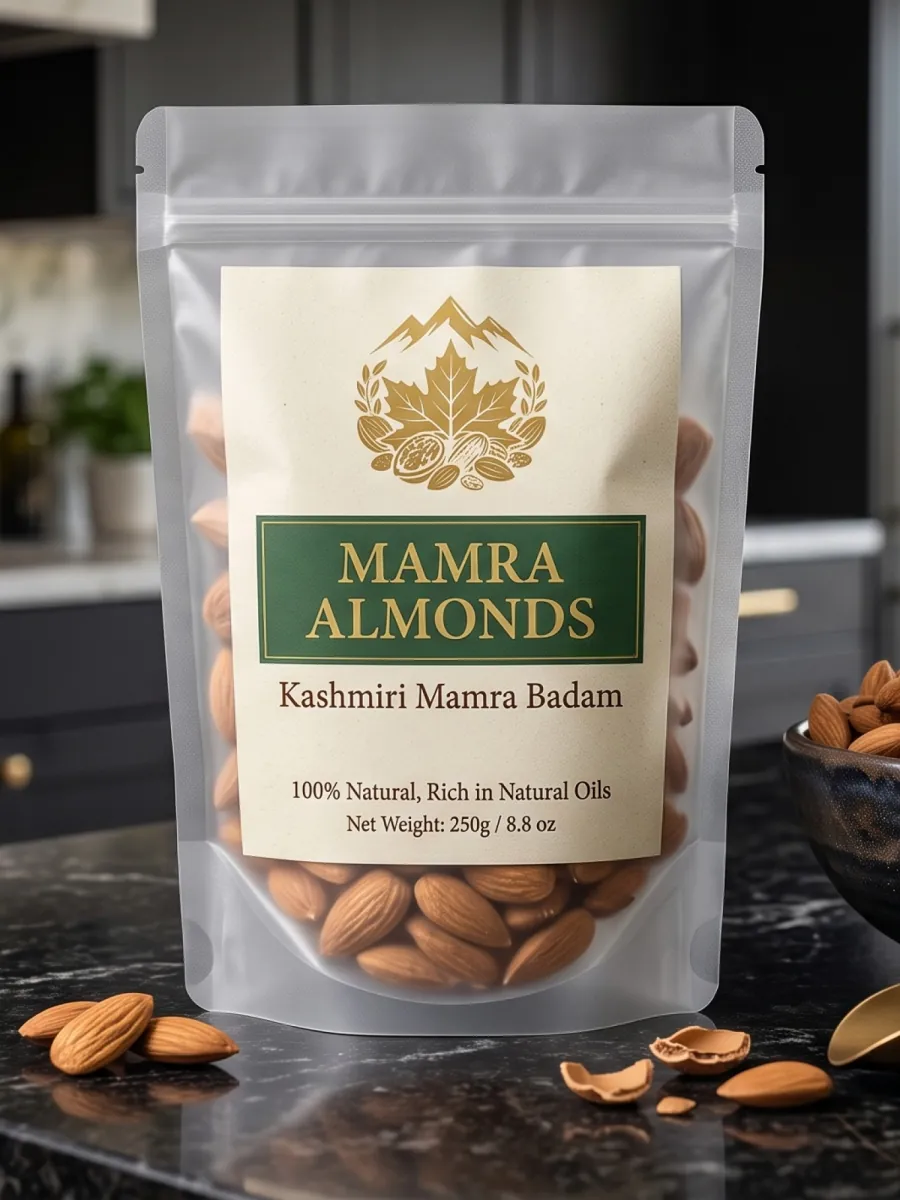
We source Mamra Badam and walnut halves direct from growers in Kashmir with no middlemen. Our Mamra Badam is Grade A, hand-graded and hand-inspected. Nothing is added to it: no additives, no preservatives, no artificial coating. Our walnut halves are superior grade and inspected by hand. Those are the answers you should expect from any seller, for any product.
To see how the same checks work on a nut, read how to identify real Mamra Badam.
Frequently asked questions about identifying real Kashmiri saffron
How do you tell real kesar from fake?
Look for thick deep-red threads, a floral smell, a bitter taste and slow gold colour in water. Then ask the seller for origin, grade, harvest season and a lab test result. Home checks reduce risk, but only laboratory testing measures purity.
Use every check together. One pass proves little, and one fail is enough to walk away.
Does the water test prove saffron is real?
No. It filters out crude fakes, such as quickly bleeding red dye, but it cannot prove purity. Added dyes and plant matter can pass. Use it as a first filter, then ask for a lab test result against ISO 3632.
Research found that blends of up to 20% safflower, marigold or turmeric slipped past ISO 3632 procedures, so a kitchen test is weaker still.
What does Kashmiri mongra look like?
Mongra is the top grade: deep-red stigma tips with little or no yellow style. It looks darker and more uniform than lower grades. Because grade names are not standardised on labels, always ask what a seller means by it.
Compare the threads in good light. Pale, yellow or white ends mean a lower grade.
What is saffron adulterated with?
Common adulterants are turmeric powder, safflower and paprika. Some samples have also contained artificial dyes such as Sudan I to IV and Rhodamine B. Dilution with other plant material is also used to add weight.
Buying whole threads rather than powder makes this fraud harder to hide.
What should you check on the pack before buying?
Check the origin region, grade, harvest year, batch number, ingredients and the seller’s return policy. A pack that lists only “Kashmiri saffron” with no other detail gives you nothing to hold the seller to.
Photograph the pack and keep the invoice. If the product does not match the label, you will need both.
Buy on proof, not on a story
Fake kesar thrives on buyers who want a quick test and a fair price. Neither exists. A few home checks help, but they are only the start. What protects you is a seller who names the origin, grade and harvest season, and shares a batch-specific lab test result.
The same rule holds for every premium dry fruit. Ask where it came from and who graded it. Valley Origin does not sell saffron, but it does sell Kashmiri Mamra Badam, direct from growers. See the Mamra Badam page for current sizes and prices, or browse the full range of products.