The right Diwali gift depends on who opens the box and when
You are choosing between dry fruits or sweets for a Diwali gift, and the list has many kinds of people on it. Parents who expect mithai. A manager who avoids sugar. Clients in another city who will receive the parcel days later.
Sweets and dry fruits do different jobs. One is a taste of the festival, eaten fast. The other is a gift that stays useful for weeks.
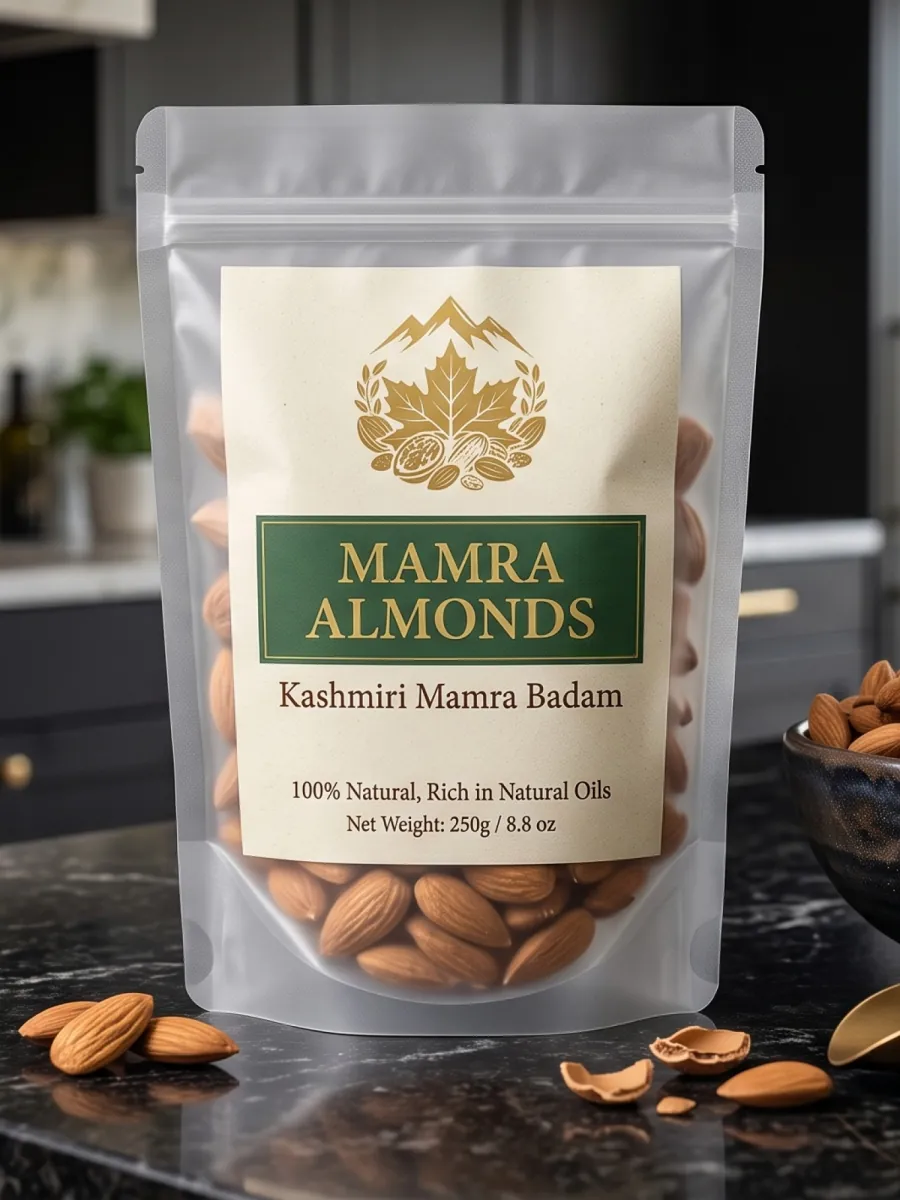
This guide is for both families and companies. It compares the two by recipient, shelf life and sugar, and it says plainly when sweets are the better pick. If almonds are on your shortlist, see Kashmiri Mamra Badam for what a premium almond looks like.
Are dry fruits better than sweets as a Diwali gift?
Not always. Dry fruits keep longer, travel better and suit more diets. Sweets carry more festive meaning and are loved by almost everyone who eats them. The better gift is the one that matches the recipient’s habits and how soon they will open it.
Sweets have a place that nuts cannot fill. Exchanging mithai is a Diwali ritual in many homes, and a plate without it can feel incomplete. If you are visiting an elder who expects it, bring it.
The case for dry fruits is practical. A news report from Hyderabad in October 2024, published by Deccan Chronicle, described a shift towards dry fruit gifting. Local market sources linked it to health awareness and more people managing diabetes or weight. That is one city and one season, not a national trend, but it matches what many gift buyers say.
So the honest answer is “it depends”. The next sections show on what.
Which recipients suit mithai and which suit dry fruits?
Choose mithai for elders, close family and hosts who will eat it within days. Choose dry fruits for colleagues, clients, distant relatives and anyone limiting sugar. For a mixed list, give each group the format that fits, not one gift to all.
The table below is a planning guide, not a rule.
| Recipient | Better pick | Why |
|---|---|---|
| Parents, in-laws | Mithai, plus a nut pack | They expect it at Diwali |
| Hosts at a family dinner | Mithai | Eaten the same evening |
| Relatives in other cities | Dry fruits | Survive days in transit |
| Office staff | Dry fruits | Easy to share, no fridge |
| Clients and vendors | Dry fruits | Neutral, keeps for weeks |
| Recipients watching sugar | Plain, unsalted nuts | No added sugar |
| Neighbours, house help | Either, in a sealed pack | Pick what they already eat |
Say you are gifting a client in Pune from Delhi. A tray of fresh sweets would spend days in a courier van. A sealed pack of nuts will not care. For family, the logic flips: you hand over the box yourself, and it is eaten that week.
If your list is mostly relatives, our guide to a Diwali dry fruit gift for family covers quantities per household. For office lists, read corporate Diwali dry fruit gifts for employees.
Which lasts longer after gifting?
Dry fruits last far longer. India’s dairy board gives plain khoa 2 to 3 days at room temperature and peda about 7 days in suitable packs. Sealed raw nuts stay good for weeks in a cool, dry cupboard, though exact time depends on the nut.
Most mithai is built on milk, khoa or fresh paneer. These spoil quickly. The National Dairy Development Board says khoa has a shelf life of 2 to 3 days at room temperature. It says peda in polythene bags or parchment-lined boxes keeps for 7 days at room temperature and 30 days at 8°C or below.
That is under controlled packing. A shop tray left on a hot scooter seat will not do as well. Humid weather shortens the window further.
Raw nuts have far less moisture. They are not immortal, though. Their oils turn stale with heat and time. Our guide to storing Mamra Badam explains how.
The practical rule: if the recipient will not open the box within three or four days, choose nuts.
Can you give both dry fruits and sweets?
Yes, and many people do. A small box of mithai for the festive moment, plus a larger sealed pack of nuts that lasts, covers both. Keep the mithai portion modest, since it must be eaten fast, and spend the larger share of the budget on nuts.
Giving both works best when the two have clear roles. The mithai is for Diwali night. The nuts are for the weeks after.
A simple split for a family visit: one small box of mithai that the household can finish in a day or two, and one pack of almonds or cashews. Say your budget is fixed. Putting most of it into nuts gives a gift that is still being enjoyed in November.
Some sweet makers now blend the two, with kaju katli, badam barfi or fig rolls. These still contain sugar, and the nuts inside are only part of the weight. If a recipient is limiting sugar, a sweet containing nuts is still a sweet.
For a mixed gift, buy the nuts first. They set your budget and your date, and the sweets can be bought last, fresh, a day or two before you hand them over.
What should you give a recipient who has diabetes?
Plain, unsalted, uncoated nuts are the gentler choice. Sweets, candied fruit and sugar-coated nuts add sugar. Ask the person or check with their doctor first, since needs differ. If you are unsure, a non-food gift is the safest.
ICMR’s National Institute of Nutrition sets a clear marker for sugar. Its Dietary Guidelines for Indians 2024 say added sugar should stay below 5% of daily energy, which works out to about 25 g a day on a 2,000 kcal diet. A couple of pieces of mithai can use a large share of that.
The same guidelines show 35 g of nuts and seeds in their 2,000 kcal food pyramid. So a modest handful fits into a balanced day. That is general guidance for healthy adults, not advice for a person with diabetes.
Avoid these for a diabetic recipient:
- Sugar-coated or caramelised nuts. The coating is sugar.
- Dried figs, dates and sweetened raisins in large packs. They are concentrated sugar.
- Flavoured or salted mixes. The label may hide added sugar or salt.
Nut allergy is the other risk. If you do not know, ask. A person with an allergy or a health condition should check with their doctor before eating any new food.
For companies: how do you plan a Diwali gift order for staff and clients?
Start four to six weeks before Diwali. Fix the headcount, the budget per head and the delivery addresses, then ask for a quote and a sample. Choose nuts for staff and clients, since they travel well. This is general guidance, not a promise from any seller.
Say you are an HR manager with 50 employees and 20 client addresses. These are the steps that matter.
- Count and split. List staff at one office separately from clients in other cities. Delivery to many addresses costs more time than delivery to one.
- Set a budget per head. Decide it first, then choose the product. Tiers by seniority are common.
- Ask for a GST invoice. Your accounts team will need it. Confirm it before you order.
- Check dietary needs. Staff with nut allergies or diabetes need an alternative. Ask in the planning stage, not on delivery day.
- Ask about personalisation. A card or label is common. Confirm what is possible and the lead time.
- Order a sample. Check the packing date, smell and size before you commit to 70 boxes.
For client lists in particular, see Diwali gifts for clients. To choose between box styles, read how to choose a dry fruit gift box.
What mistakes should you avoid?
The common mistakes are sending fresh sweets a long way, buying nuts by box size, ignoring sugar and allergies, and ordering late. Each has a simple fix: match the gift to the journey, check net weight, ask about diet, and order early.
Sending fresh sweets by courier. Milk sweets are fragile. Send nuts to other cities, and hand-deliver mithai only in your own.
Buying by the box. A big box can hold little nut. Compare net weight, not size.
Skipping the dietary check. For staff and clients, one email asking about allergies and diabetes avoids a wasted gift.
Buying nuts without a packing date. Stale nuts are a poor gift. Smell one nut and taste it before you buy in bulk.
Ordering late. Festive stock and courier slots tighten close to Diwali. Order early, with time to spare.
How does Valley Origin handle Diwali gifting orders?
Valley Origin supplies dry fruits for festive, wedding and corporate gifting. Send your list, budget and dates through the contact page and ask for a quote. We do not publish gift packs, minimums or delivery times on this page.
Valley Origin is a family business that began in Kashmir in 1975. It sources Mamra Badam and walnut halves direct from growers, with no middlemen. Its Mamra Badam is Grade A, hand-graded and hand-inspected, with no additives, no preservatives and no artificial coating. Its walnut halves are superior grade and inspected by hand.
Our Mamra Badam grows in Kashmir at altitudes above 1,800 metres. It comes in 250 g, 500 g, 1 kg and 2 kg sizes. Free shipping applies on orders above Rs 999. Read our story for how we source, and contact us for a gifting quote.
Frequently asked questions about dry fruits or sweets for Diwali gifts
Is a dry fruit gift better than mithai for Diwali?
It depends on the recipient. Dry fruits keep longer and suit people limiting sugar, so they work well for staff, clients and distant relatives. Mithai suits elders and hosts who expect it and will eat it within days.
If you are unsure, give a small mithai box and a pack of nuts together.
Which dry fruit is best to give instead of sweets?
Almonds are the safest single choice, followed by cashews, pistachios and walnuts. They are firm, familiar and keep well. Choose plain, uncoated nuts with a clear packing date, in a sealed pack.
Our Mamra Badam versus Gurbandi guide helps if almonds are your pick.
How long do Diwali sweets last compared with dry fruits?
Milk-based sweets last days: the dairy board gives khoa 2 to 3 days and peda about 7 days at room temperature in suitable packs. Sealed raw nuts last weeks in a cool, dry place.
Heat and humidity shorten both, so store gifts away from the stove and sunlight.
Can you give dry fruits to someone with diabetes?
Plain, unsalted nuts are the milder choice, and sweetened dried fruit is best avoided. Ask the person or their doctor first, since needs differ. A non-food gift is safer if you are unsure.
Sugar-coated nuts add sugar. Raw nuts do not.
How much should you spend on a Diwali dry fruit gift?
There is no standard figure. Set a budget per recipient first, then pick the nut and pack size to fit. Spend more on elders and key clients, and keep the base gift equal for the rest. See current prices before you decide.
For company orders, ask for a quote so the price covers your headcount and addresses.
Match the gift to the journey, not to the habit
Sweets are for the moment and dry fruits are for the weeks after. For recipients who live close and expect mithai, buy fresh sweets. For everyone who is far away, watching sugar or receiving a gift from your company, nuts are the sturdier choice.
When you know your list and your dates, see Kashmiri Mamra Badam and its current prices. For a larger or corporate list, contact us for a gifting quote.