Your team will remember the quality, not the box
You are an HR or admin lead with a Diwali deadline, a budget and a long list of employees. Corporate Diwali dry fruit gifts for employees are a safe choice because almost everyone eats them. They are also easy to get wrong, because a dull or stale nut says the company did not care.
This guide is a buyer’s checklist. It covers what to choose, how to judge quality, how to brief a supplier and how to plan a bulk order. It is written for companies, not for families.
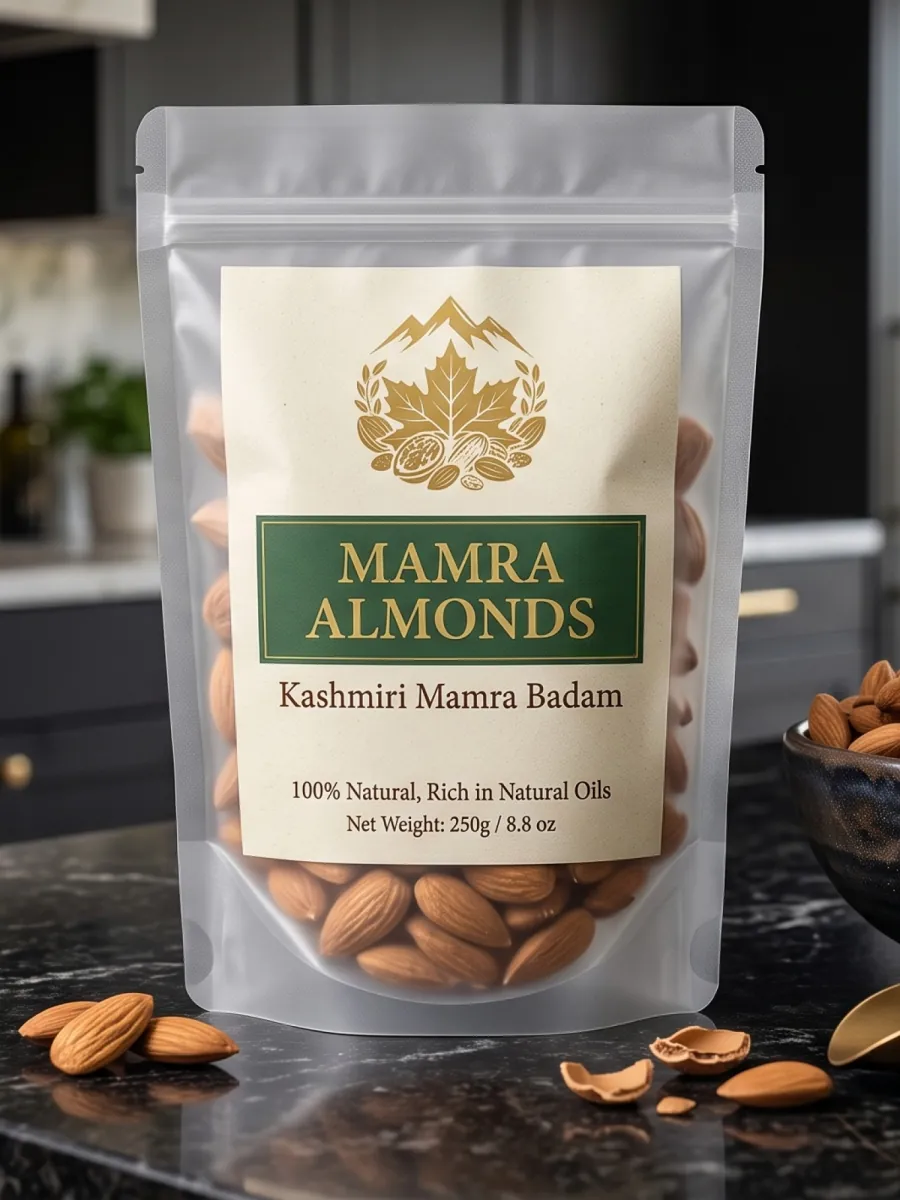
Quality matters most with almonds, so start by knowing what Mamra Badam is and why it sits at the top of the range.
Why are dry fruits a good Diwali gift for employees?
Dry fruits suit a mixed team. They are vegetarian, need no cooking, travel well and carry the festival tradition of sharing dry fruits and sweets. Unlike a perishable sweet box, they do not have to be eaten on the day, so staff can share them at home.
Diwali gifting in India has long meant mithai and dry fruits. Dry fruits have the edge for a company because the gift does not spoil in a courier van or a warm office.
They also fit teams with different habits. Some staff avoid sugar, some avoid sweets for religious reasons, and some live alone. A box of nuts works for all of them.
One honest limit: nut allergies exist. Add a line to the gift note so anyone with an allergy can pass the box on. Staff with a medical condition should check with their doctor before eating any new food.
Which dry fruits should you choose for employee gifts?
Choose familiar, firm dry fruits: badam (almond), kaju (cashew), pista (pistachio) and akhrot (walnut). Add soft fruits like anjeer (fig) or kishmish (raisin) only if the supplier packs them well. A short, high-quality mix beats a long, mediocre one.
Fewer varieties, better quality, is the rule. A box with four good dry fruits looks generous. A box with twelve mixed grades looks like filler.
Use this table to match the gift to your team.
| Your situation | What to choose | What to watch |
|---|---|---|
| One gift for everyone, simple | A single premium nut such as almonds | Check the grade and harvest season |
| Mixed team, varied tastes | Four firm nuts in one box | Ask for packing dates on every pack |
| Senior staff and clients | Fewer, better items, with a printed note | Keep it separate from the staff gift |
| Staff across many cities | The same box, shipped to each address | Confirm delivery to every pincode |
If almonds are on your list, read how Mamra Badam compares with Gurbandi before you decide on the variety.
What separates a premium dry fruit gift from a cheap one?
Four things: grade, freshness, origin and packing. A premium gift uses a stated grade, has a recent packing date, names where the nuts were grown and arrives sealed. A cheap one hides all four behind a decorated box.
Grade is the size and soundness of the nut. Ask the supplier which grade they use and whether nuts are sorted by hand. Broken or shrivelled pieces in a gift box are a bad sign.
Freshness is the biggest risk. Dry fruits hold oils that turn stale with heat and time. Our guide to storing Mamra Badam explains why. Ask for the packing date, not just a “best before” date.
Origin tells you who grew it. A supplier who sources direct can name the region and harvest season. One who buys from a mixed lot often cannot.
Packing matters for a different reason: it must be sealed and sturdy enough to survive many courier journeys. A beautiful box with loose nuts inside will not.
For companies: how do you plan a bulk order?
Plan backwards from the date you want gifts in staff hands. Count your employees and addresses, set one budget per head, confirm the GST invoice and personalisation in writing, and place the order six to eight weeks before Diwali.
This section is general planning advice. It is not a promise about any one supplier.
Set the timeline
Diwali falls in October or November, and every company orders at once. Suppliers fill up. As a rule of thumb, brief your supplier six to eight weeks ahead and approve a sample before you confirm the full order. Leave a buffer for delivery to cities outside the main metros.
Fix the quantity and budget
Say you are buying for 50 employees at one office and 20 working from other cities. That is 70 gifts, 21 of them needing individual courier delivery. Add about five to ten per cent extra for late joiners, clients and damage. Decide one budget per head before you ask for quotes, so every supplier quotes the same thing.
Get the GST invoice right
Ask for a proper GST invoice in your company name and GSTIN. Then speak to your accountant about the tax treatment. Two points from the GST law are worth knowing. Schedule I of the CGST Act, 2017 says gifts from an employer to an employee not exceeding Rs 50,000 in value in a financial year are not treated as a supply. Section 17(5)(h) of the same Act blocks input tax credit on goods disposed of by way of gift. Rules get amended, so check the current text on the CBIC site with your accountant.
Plan delivery and personalisation
If staff are in several cities, ask whether the supplier can ship to many addresses from one order. Send them a clean spreadsheet with name, full address, pincode and phone number. If you want a company logo or a printed note, ask what is possible and how it affects the timeline.
What mistakes should you avoid?
The common mistakes are ordering late, skipping a sample, choosing by box rather than contents, giving different value to different grades of staff without a reason, and forgetting allergies. Each has a simple fix, below.
Ordering late. The fix is to brief the supplier six to eight weeks ahead, not two.
Skipping the sample. Ask for a sample pack and taste it. Check the colour, crunch and smell, and ask how old the stock is.
Choosing by the box. Ask for the weight of dry fruit in each pack, not the weight of the box. Compare quotes on the contents.
Unfair tiers. Large gaps in gift value cause quiet resentment. If you must have tiers, keep the base gift the same for all staff and add a separate gift for clients.
Forgetting allergies. Add an ingredient line to the gift note and let staff swap or pass on the gift.
How does Valley Origin handle gifting orders?
Valley Origin supplies dry fruits for festive, wedding and corporate gifting. Enquiries go through the contact page, where you can share your headcount and timeline and ask for a quote. We do not publish gift packs or prices here.
Valley Origin is a family business that began in Kashmir in 1975. It sources Mamra Badam and walnut halves direct from growers, with no middlemen. Its Mamra Badam is Grade A, hand-graded and hand-inspected, with no additives, no preservatives and no artificial coating. Its walnut halves are superior grade and inspected by hand.
The signature product is Kashmiri Mamra Badam, grown at altitudes above 1,800 metres. See current Mamra Badam prices for a sense of the product. For a bulk or gifting quote, write to us through the contact page. You can also read about how we source.
Frequently asked questions about corporate Diwali dry fruit gifts
How do you choose dry fruits for employee gifts?
Pick four familiar, firm dry fruits such as almonds, cashews, pistachios and walnuts. Check grade and packing date, and keep the gift the same for all staff. Add an allergy note so nobody is caught out.
Familiar items please the most people. Save unusual items for clients.
What should you ask a supplier before a bulk order?
Ask for the grade, the harvest season, the packing date, whether anything is added or coated, and who handles damaged boxes. Also ask for a sample, a GST invoice and how delivery to many addresses works.
Get the answers in writing, so every supplier is compared on the same terms.
How early should HR order for Diwali?
Brief the supplier six to eight weeks before Diwali. That leaves room for a sample, approval, personalisation and delivery to several cities. Ordering in the last two weeks leaves you little choice and no buffer.
This is a planning rule of thumb, not a fixed rule. Ask each supplier for their own cut-off date.
Which dry fruits keep well in a gift box?
Firm nuts such as almonds, cashews, pistachios and walnuts keep best, if sealed and kept cool and dry. Soft fruits like figs and raisins take up moisture more easily, so they need good packing.
Staff may keep the box for days. Tell them to store it in an airtight jar, as in our storage guide.
How do you keep gifts fair across a large team?
Give every employee the same base gift, whatever their role or city. If you add something for senior staff or clients, make it a separate gift. Equal gifts avoid quiet comparisons in a big team.
Say you have staff in five cities. Ship the same box to each, rather than a cheaper local substitute.
Order early, and judge the contents
A good Diwali gift is simple: fresh, well graded dry fruit that arrives sealed and on time. Choose a short list of firm nuts, ask the hard questions about grade and packing date, and start planning six to eight weeks ahead.
If you want to see what Valley Origin’s quality looks like before you decide, start with the Kashmiri Mamra Badam. When you know your headcount, budget and dates, contact us for a gifting quote.