A bitter badam needs a quick check, not a guess
You bite into an almond and the taste is bitter. Now you wonder whether the packet is stale, damaged or something worse. The honest answer is that there are three different causes, and you can tell most of them apart at home.
Why almonds taste bitter depends on what went wrong: the oil, the drying, or the type of tree. Fresh, sweet badam (almond) tastes mild, a little buttery and clean. Anything strongly bitter is a signal to stop and look closer.
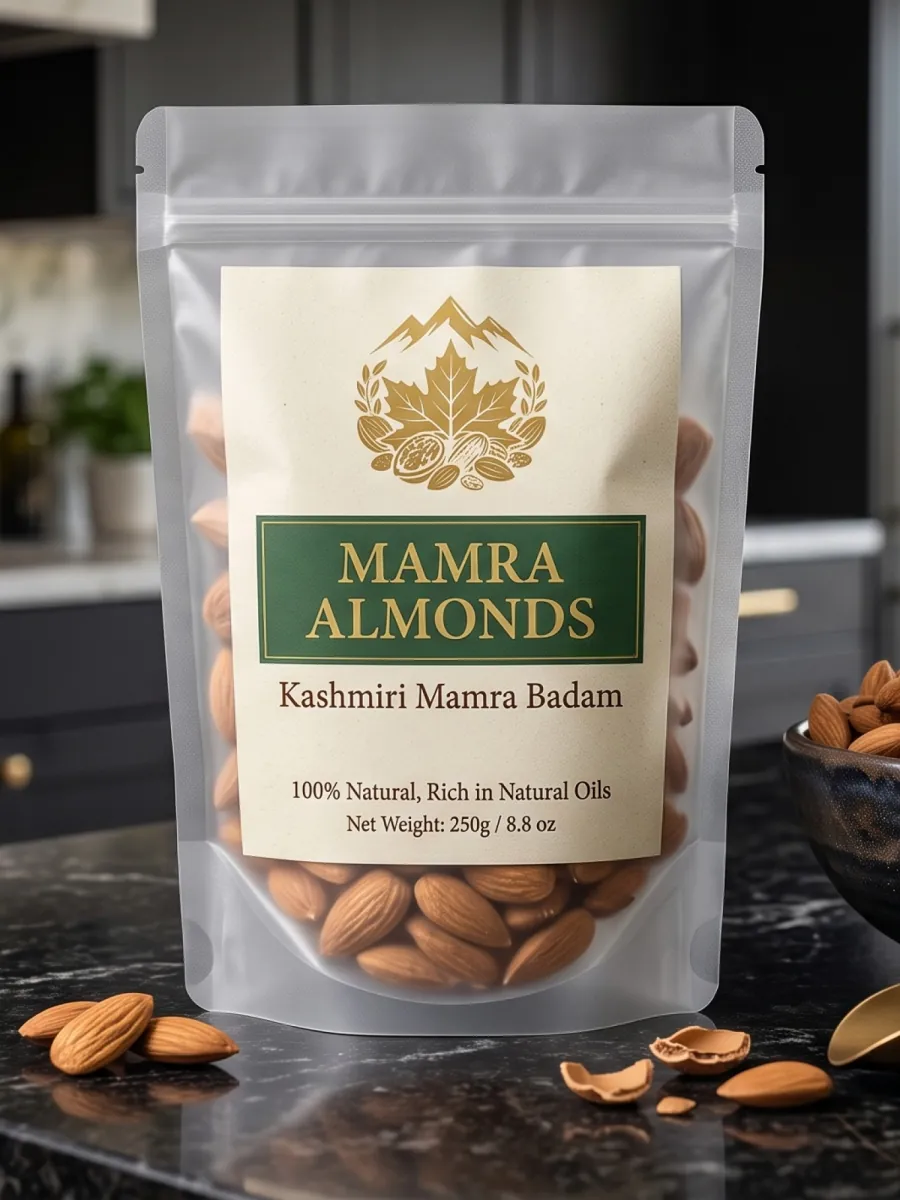
This guide gives a smell, taste and cut test, the published safety facts on bitter almonds, and how to stop the problem at home. For a fresh reference, see our Kashmiri Mamra Badam.
Why do my almonds taste bitter?
Almonds taste bitter for three reasons. Rancid oil makes them sharp and harsh. Kernels damaged by moisture before drying can taste bitter. A true bitter-almond variety carries amygdalin, a naturally bitter compound. Smell and taste, in that order, usually tell you which one you have.
Each cause looks different once you know what to look for.
Rancid or stale almonds. Almonds are about 50% fat, mostly unsaturated. The Almond Board of California says this fat can react with oxygen and cause quality problems in storage. It also says that as oxidation goes on, nuts develop “rancid” flavours and odours. Heat, moisture and light speed this up.
Damaged kernels. Moisture from rain or irrigation can keep a nut from drying well and damage its inside. A 2016 report from the American Institute of Physics, on UC Davis research, says some almonds taste bitter when cooked because of this damage. The damaged nuts do not pose a health risk, it adds. Raw, they can look just like good ones.
A bitter-almond variety. This is a different kind of almond tree, not a spoiled nut. A 2018 paper in Plant Physiology found that amygdalin can be up to 1,000 times higher in bitter than in sweet almond kernels. The paper also says plainly that amygdalin has a bitter taste.
How do you tell rancid from bitter-variety almonds?
Smell first, then taste a small piece, then cut one open. Rancid almonds smell sharp, sour or like paint. A bitter-variety kernel can smell almond-sweet yet taste strongly bitter. Either way, strong bitterness means you should stop eating and not finish the handful.
Follow this order. Stop at the first step that fails.
- Smell a small handful. Breathe in close. Fresh almonds smell mild, sweet and nutty. A sharp, sour, soapy or paint-like smell points to rancid oil.
- Look at the nuts. Fuzzy or powdery patches mean mould. Webs or tiny holes mean insects. Either one means the packet goes in the bin.
- Taste one almond, and no more. Mild and sweet is normal. If it is sharply bitter, spit it out and do not try a second one.
- Cut one almond in half. Smell the cut face, which is fresher than the skin. Dark, brown or shrivelled patches inside suggest damage or age.
- Compare with a fresh pack. Your nose learns fast with a good reference.
The cut in step 4 helps with damage and age. It will not identify a bitter-variety kernel, because we found no source showing that bitter kernels look different. Taste is the only home signal for that case, which is why you taste just one.
Rancid almonds are unpleasant but not the main safety risk. The University of California’s nut guide says that rancid nuts are not unsafe, but they have a sharp flavour that most people find unpleasant.
Are bitter almonds safe to eat?
Not raw. Bitter almonds contain amygdalin, which releases hydrogen cyanide when the kernel is crushed or chewed. A health article citing case studies puts serious poisoning at roughly 6 to 10 raw kernels in an adult. Sweet almonds are different. If you ate a bitter one, speak to a doctor.
The Plant Physiology paper says the toxicity of bitter almonds comes from amygdalin, which releases toxic hydrogen cyanide on breakdown. Sweet almonds carry far less of it. The same paper notes that this low level is why sweet kernels are the standard breeding goal.
A Healthline review of the studies reports that about 6 to 10 raw bitter almonds can cause serious poisoning in an average adult, and that smaller amounts may harm children. It also says heat lowers cyanide but that more research is needed to name a safe amount. Its advice is to avoid bitter almonds. We have not seen the case studies themselves, so read the figure as a guide, not a limit.
Almonds sold for eating are the sweet type. Even so, a strongly bitter one deserves respect. Stop eating, keep the packet, and check with a doctor if you or a child ate several, or feel unwell. This is food guidance, not medical advice.
Can you still eat slightly bitter almonds?
A faint, dry edge is usually fine, especially on a fresh nut that smells sweet. Anything sharp, harsh, sour or lingering is not worth eating. Do not try to rescue rancid or strongly bitter almonds by soaking, roasting or cooking them.
Here is a quick guide.
- Fine to eat: sweet, nutty smell, creamy taste, at most a faint dry edge from the skin.
- Past their best: sharp, paint-like smell, harsh or soapy taste. Rancid oil is unpleasant, not the main safety risk.
- Stop and discard: a strongly bitter taste, or mould, webs or holes. Throw the whole packet away. Do not pick out the clean-looking nuts.
Cooking does not reliably fix a bad nut. The Healthline review says heat reduces cyanide in bitter almonds but that a safe amount is not established. We found no study showing that soaking or roasting undoes rancidity either. Our guide on whether to soak and peel almonds covers what soaking really does.
If you have a nut allergy, are pregnant, or are feeding a child, check with your doctor before eating nuts you are unsure about.
How do you stop almonds going bitter at home?
Keep them airtight, cool, dry and dark. The Almond Board of California recommends under 10 °C and under 65% relative humidity, with moisture at 6% or less. In a warm Indian kitchen, that means a sealed jar in the fridge and small portions at hand.
The Board says almonds stored at those conditions can last more than two years. That figure is for sealed commercial storage. A kitchen cupboard in an Indian summer is far warmer, so read it as a ceiling. The UC guide says nuts hold quality for a few months at room temperature, and less in a warmer place.
The steps are simple:
- Move the almonds out of the pouch on day one into an airtight glass jar.
- Keep a small jar for the week and the rest in the fridge.
- Let a cold jar warm up before opening it. This stops damp forming on the nuts.
- Buy what you will finish in a few weeks, not a year’s supply.
Our full routine is in how to store Mamra Badam.
What mistakes make almonds bitter, and how do you fix them?
Most bitter almonds at home come from five mistakes: leaving the pack open, storing near heat, buying too much at once, soaking and keeping the nuts wet, and eating on after a bad first bite. Each has a simple fix.
Leaving the pack rolled down. Air and damp get in, and the oil oxidises faster. Fix: a sealed jar from day one.
Keeping the jar by the stove or on a sunny shelf. Heat and light speed rancidity. Fix: a lower cupboard for a week’s supply, the fridge for the rest.
Buying a year’s stock in one go. The last handfuls sit through a whole summer. Fix: buy in sizes you will finish, and see the types of almonds in India before choosing.
Soaking a big batch and keeping it. Wet almonds spoil faster. Fix: soak only what you eat that day.
Finishing the handful after one bitter bite. Fix: stop, smell, and test the rest the way the steps above say.
Frequently asked questions about bitter almonds
Why do almonds taste bitter after roasting?
Roasting can bring out bitterness in kernels that were damaged by moisture before drying. A report on UC Davis research says such nuts can taste bitter when cooked, and roasting darkens them. Rancid almonds also taste worse once roasted, as heat does not remove the off flavour.
Raw damaged almonds can look the same as good ones, so the problem often shows only after cooking. If a whole batch turns bitter when roasted, the nuts were the cause, not your pan.
Is a bitter almond always rancid?
No. Rancid almonds taste bitter, but so do damaged kernels and true bitter-variety almonds. Smell tells you most: rancid nuts smell sharp, sour or like paint. A strongly bitter almond with a sweet smell could be another cause, so stop eating it.
The three causes overlap, which is why bitterness alone cannot decide it.
Can bitter almonds make you ill?
Raw bitter-variety almonds can. They contain amygdalin, which releases hydrogen cyanide. A health review citing case studies reports serious poisoning at roughly 6 to 10 raw kernels in an adult. Check with a doctor if you or a child ate several.
We are describing published findings, not giving medical advice.
Does the colour or shape of an almond show if it is bitter?
We found no source showing that you can spot a bitter-variety kernel by sight. Taste one almond to check. Mould, webs, shrivelling or dark patches do point to age or damage, but a clean-looking nut can still be bitter.
Buying from a seller who states the variety and origin removes most of the guesswork.
How long do almonds stay fresh before they turn bitter?
It depends on heat, damp and air. Sealed and kept under 10 °C and 65% humidity, almonds can last over two years, says the Almond Board of California. In a warm Indian kitchen, plan for a few months and use the fridge for more.
Smell the jar before every refill. It takes two seconds.
Smell first, then decide
Bitter does not always mean bad, and it does not always mean harmless. A faint edge on a sweet-smelling nut is usually fine. A sharp smell means rancid oil. A strongly bitter taste means you should stop and not finish the handful.
To keep the next pack sweet, seal it, keep it cool and buy what you will finish. Valley Origin sells Kashmiri Mamra Badam: Grade A, hand-graded and hand-inspected, with no additives, preservatives or artificial coating. It is grown in Kashmir above 1,800 metres, and our family has sourced from Kashmir growers since 1975. Read our story, learn how to identify real Mamra Badam, and see current prices on the Mamra Badam page.