Three names, one shelf, and a lot of confusion
The types of almonds in India are easy to mix up, because shops sell them side by side and often under loose names. A bag may say “premium badam” and tell you nothing else. Inside could be a smooth California almond, a wrinkled Mamra or a small Gurbandi.
This guide is a plain map. It names the almonds you will meet, says where each comes from, and shows how to tell them apart by eye and by taste. It links to our deeper posts instead of repeating them. If your interest is the Kashmiri one, start with Kashmiri Mamra Badam and read on.
What are the main almond types sold in India?
Three groups cover most of what you will find: California almonds, mostly the Nonpareil variety, which are smooth and mild; Mamra, a small, wrinkled, oil-rich almond linked to Kashmir and Afghanistan; and Gurbandi, a small, round almond, often bitter. Names are used loosely, so check the label.
India grows only a small share of what it eats. Most of India’s almonds come from the Kashmir region, according to a paper from ICAR-CITH in Srinagar, and the same abstract says much of that output comes from seedling trees, not named varieties. The United States produced about 51% of the world’s almonds in 2024, as the Wikipedia almond entry reports. So the almond in a typical Indian shop is more likely to be Californian.
Here is the map in one table. Descriptions of Mamra and Gurbandi come from seller and trade sources, which agree on shape and taste but not on figures. We found no independent lab comparison.
| Type | Usual origin | Shape and skin | Taste | Best for |
|---|---|---|---|---|
| California (Nonpareil) | California, USA | Medium, smooth, light skin | Mild, lightly sweet | Everyday snacking, baking, slivers |
| Other California types | California, USA | Narrow, wrinkled, brown | Mild | Roasting, salting, processed foods |
| Mamra | Kashmir, Afghanistan | Small, wrinkled, rich in oil | Sweet, rich, creamy | Eating raw, badam milk, gifting |
| Gurbandi | Afghanistan | Small, round | Often bitter | Traditional use, sold at lower rates |
What is a California almond, and what is Nonpareil?
A California almond is any almond grown in California. Nonpareil is its best-known variety, a soft-shelled almond with a smooth surface and light skin. It is about 40% of California production. Other California varieties are narrower and more wrinkled, and are mostly used for roasting and processing.
The Almond Board of California and UC Davis variety report describes Nonpareil as a medium-sized kernel with a uniform shape, smooth surface and light, blond skin. It says Nonpareil sells at a premium in California. It also says California grows about 30 varieties, with 13 major ones making up over 98% of output.
That is why “California almond” is not one product. It is a wide group. The smooth, pale, even almond in a typical vacuum pack is usually Nonpareil or a close type. The report says some other varieties are sold as “Nonpareil type”.
For the full contrast with Kashmiri almonds, see our posts on Mamra Badam vs California almonds and the real differences in origin, growing and processing.
What is Mamra Badam?
Mamra Badam is a small, wrinkled, oil-rich almond associated with Kashmir and Afghanistan. It is thin-skinned, sweet and creamy, and costs more than most almonds because supply is limited. The name is used loosely, so origin and shape matter more than the label.
Mamra is a name for a type of almond more than a single registered cultivar. Sellers describe a kernel that is shorter and more wrinkled than a California almond, with a richer feel in the mouth. Claims about exact oil content vary a lot between sources, from about 45% to well above 50%, so we leave out a figure.
The grower side is thinner than you might expect. The CITH paper says most Kashmiri almond output comes from unnamed seedling trees that give a hard-shelled, small nut, and that long trials picked Waris, Pranyaj and Nonpareil as the most promising planting varieties. Kashmir is a region of mixed trees, not one standard almond.
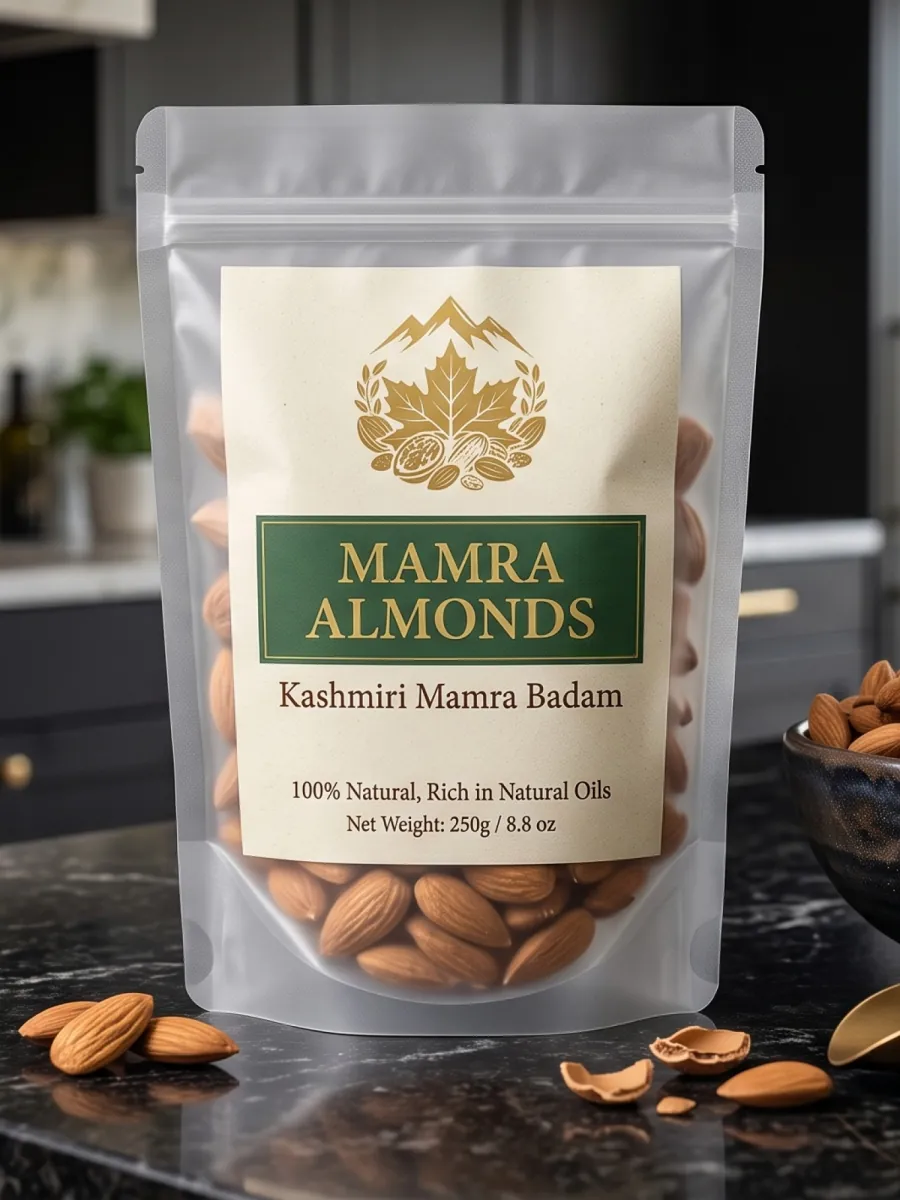
Valley Origin sells Kashmiri Mamra Badam, a small, wrinkled, oil-rich almond grown in Kashmir at altitudes above 1,800 metres. Every pack is Grade A, hand-graded and hand-inspected, with no additives, preservatives or artificial coating. Our complete guide to Mamra Badam goes into growing and grades.
What is Gurbandi, and is it the same as Mamra?
Gurbandi is a different almond from Mamra. Sellers describe it as small and round, often with a bitter edge, and link it to Afghanistan. Some shops sell one as the other, so shape and taste are the checks. Mamra is wrinkled and sweet. Gurbandi is rounder and can taste bitter.
The names get mixed because both are small, both come from the same wider region, and both sell below Californian looks. They are not the same product. Our full post on Mamra Badam vs Gurbandi covers the comparison, so we keep this short.
One safety point is worth knowing. Bitter almonds contain amygdalin, which releases cyanide when it breaks down. The Wikipedia almond entry says raw bitter almonds can be dangerous and that the cyanide must be removed before eating. If an almond tastes sharply bitter, spit it out and do not keep eating it. Ask the seller what you bought.
Which almond is best for daily eating?
There is no single best almond. California almonds suit daily eating on a budget, because they are mild and easy to find. Mamra suits those who want a richer, sweeter almond and will pay for it. Gurbandi is not a good daily snack if it tastes bitter.
All sweet almonds have the same broad nutrition. The Wikipedia almond entry lists about 579 kcal, 21.2 g protein, 49.9 g fat and 12.5 g fibre per 100 g. We found no trustworthy per-variety table, so we do not claim that one type is more nutritious. Taste, texture and trust in the seller are the real differences.
A few situations help:
- Daily snacking for the family: California Nonpareil is mild and consistent. It is the practical pick.
- Badam milk, halwa and kheer: Mamra gives a richer, creamier result, as it is oilier.
- Gifting: a pack with clear variety and origin on the label reads as more thoughtful. Mamra from Kashmir has a story to tell.
- Soaking: any sweet almond works. See should you soak almonds and peel them for what the research says.
If you are buying for a child, a pregnant relative or anyone with diabetes or a nut allergy, check with a doctor about amounts. Almonds are a tree nut and a common allergen.
How can you tell the almond types apart in the shop?
Check shape, skin and taste. California almonds are smooth, even and pale. Mamra is small, wrinkled and plump. Gurbandi is small and round, and may taste bitter. Taste one before you buy a large pack, and ask the seller for the variety and origin.
Use these four checks:
- Look at the surface. A smooth, uniform kernel with light skin points to Nonpareil. A deeply wrinkled, plump kernel points to Mamra.
- Compare the size. Mixed sizes in one pack are a warning. Even sizes suggest sorting.
- Taste one. Mamra should taste sweet and creamy. A sharp bitterness is a flag.
- Ask for the label. It should name the variety, the origin and the pack date. “Premium badam” alone says nothing.
These checks help, but they are not proof. A skilled seller can mix lots. Our post on how to identify real Mamra Badam lists six home checks, and tells you which ones are weak.
Why do almond prices differ so much?
Prices differ because of variety, size, grade, origin and how much of the almond is sold in a year. Rare, small-supply types cost more per kg than widely grown ones. A price far below the usual range for Mamra is a warning that it may be something else.
We give no rupee figures here. The price pages we found were seller listings with no dates or method, and almond rates move week to week. For a current idea, compare the price per kg across three or four sellers, and compare grade and variety, not only the headline.
Three things drive most of the gap. First, supply: California grows almonds at huge scale, as the production figures above show, while Kashmir’s output is far smaller and mostly from seedling trees. Second, grade and sorting: size, colour and broken pieces change the price. Third, trust: a seller who names the variety and origin has more to lose than one who does not.
Valley Origin does not state prices in posts. See current prices on the Mamra Badam page.
Frequently asked questions about types of almonds in India
What are the main types of almonds sold in India?
The three most common are California almonds (mainly Nonpareil), Mamra and Gurbandi. California almonds are smooth and mild. Mamra is small, wrinkled and rich. Gurbandi is small and round. Availability and quality vary by city and seller.
Spanish and Australian almonds are also sold, so check the origin on the pack.
What is the difference between Mamra and Gurbandi?
Mamra is a wrinkled, sweet, oil-rich almond linked to Kashmir and Afghanistan. Gurbandi is a smaller, rounder almond, often bitter, linked to Afghanistan. They are different almonds, but sellers sometimes sell one under the other’s name.
Read the Mamra vs Gurbandi comparison for a closer look.
Are Kashmiri almonds the same as Mamra?
Not exactly. Kashmir grows several almonds, and the CITH paper says most come from seedling trees. Mamra is a type that sellers link to Kashmir. A label that says Kashmiri does not prove the almond is Mamra, and a Mamra label does not prove Kashmir.
Ask for variety and origin together.
Which almond is best for soaking and peeling?
Any sweet almond works for soaking. Mamra and California almonds both soften overnight and the skin slips off. The choice comes down to taste and budget, not soaking results.
Our guide on soaking almonds has the method.
How should you store almonds?
Keep almonds in an airtight container in a cool, dark, dry place. In hot or humid weather, use the fridge. Oil-rich almonds go rancid faster in heat, so buy in amounts you can finish.
Our post on storing Mamra Badam covers the steps.
Pick the almond for the job
There is no ranking that fits every kitchen. California Nonpareil is the practical everyday almond. Mamra is the richer, rarer choice for milk, sweets and gifts. Gurbandi suits traditional use and should not be a daily snack if it tastes bitter.
Whatever you buy, ask for the variety, the origin and the pack date. Those three answers matter more than the word premium.
If you want a Kashmiri almond with its origin clearly stated, see Kashmiri Mamra Badam and read how we work on our story page.