Anjeer looks simple, but the pack can hide a lot
If you are learning how to choose good anjeer, the first problem is that two packs can look alike and taste very different. One fig is plump and sweet. Another is hard, dusty or sour. Colour, size and price all send mixed signals.
Anjeer (dried fig) is sold by weight, often loose, and usually with little on the label. That makes your own checks matter. This guide covers what you can judge at home, what colour does and does not prove, and what sulphur dioxide means for you.
If you also buy almonds or walnuts, see our range of Kashmiri dry fruits.
How do you pick good dried figs?
Pick figs that are plump but not wet, even in colour, with a mild sweet smell. Press one: it should give a little. Reject figs that are rock hard, sticky with syrup, fuzzy, sour-smelling, dusty or full of tiny holes.
Run through these five checks before you buy, or when the pack arrives.
- Smell first. A good dried fig smells sweet and fruity. A sour, alcohol-like or musty smell means fermentation or damp.
- Press one. It should be firm but yield slightly. A fig as hard as a pebble is old or over-dried.
- Look at the surface. A thin white bloom is usually sugar that has crystallised. Fuzz, black spots and webbing are mould or pests.
- Check for holes and dust. Tiny holes and fine powder in the pack point to insects. Do not buy it.
- Taste one. The flavour should be sweet and clean, with the crunch of seeds. Bitter or sour means it has turned.
Look at the pack in good light. Open a few figs from the middle, not just the top layer. Our guide on how to eat dry anjeer shows how to soften and serve them once you have a good pack.
What do colour, size and texture prove?
Less than sellers suggest. Colour shows variety, drying method and possible sulphur treatment, but not freshness on its own. Large figs are not always better. Texture and smell tell you more about condition than colour or size.
Colour is the check everyone wants to use. It is useful, but it cannot settle the question.
Sulphur dioxide is used on dried fruit such as apricots and figs to hold their colour and slow rotting. So a very light, even fig may have been treated. A darker fig may not have been. But variety, sun or oven drying and age also change colour, so you cannot read treatment from colour alone.
Size works the same way. Bigger figs look impressive, yet size depends on the variety and the sorting. A mixed bag of tiny and large figs usually means the fruit was not graded. A uniform bag suggests it was sorted, but it says nothing about sweetness.
So use colour as a prompt to ask a question, not as an answer.
What is sulphur dioxide on dried fruit?
Sulphur dioxide is a permitted food preservative used on dried fruit. It keeps the colour light and slows spoilage. Most people eat it without trouble, but sulphite-sensitive people, including some asthmatics, can react. That is why it should be on the label.
Sulphur dioxide (and the sulphites that release it) is a common preservative for dried apricots, figs and other dried fruit. It stops the fruit from browning and slows the growth of moulds. This is a processing choice by the seller, not a sign of fraud.
Health authorities regulate it carefully because of sensitivity. The US Food and Drug Administration requires sulphites to be declared when a food holds 10 parts per million or more, as summarised by the University of Nebraska’s food allergy programme. The same source says the FDA has seen deaths among sulphite-sensitive asthmatics. Wikipedia’s article on dried fruit cites the FDA estimate that about 5% of asthmatics are at risk of a reaction.
These are US rules. We could not open the current FSSAI limit for dried figs, so we give no Indian number. If you have asthma, allergies or any medical condition, check with your doctor before buying treated dried fruit.
What do lower-quality or treated figs look like?
They may be hard and dry, sticky with syrup, unusually bright or glossy, mixed in size, or dusty with signs of insects. Treated figs can also look perfectly fine. A good look is not a guarantee, so ask the seller rather than guess.
Here is what to watch for, and what each sign suggests.
- Rock-hard figs. Old stock or over-drying. They can be soaked, but the taste will be flat.
- Glossy, sticky figs. Extra moisture or added syrup or glycerin. Ask what was added.
- Unusually light, uniform figs. Possibly treated to hold colour. Check the label for sulphur or sulphites.
- Powder and holes. Pests. Reject the pack.
- Sour or alcohol smell. Fermentation. Throw it away.
- Fuzzy grey or green patches. Mould. Do not eat it.
Notice that the “treated” sign is a question, not a verdict. Sulphur treatment is allowed in many countries, and a treated fig can be sound. What matters is that you know, and choose.
If you buy other dry fruits too, the same habits apply. See how to spot problems in good quality cashew nuts and dyed pistachio shells.
Turkish, Afghan or Indian anjeer: what differs?
Variety, climate and drying differ, so size, sweetness and colour differ. No origin is automatically safe or unsafe. Judge the pack in your hand and the seller’s answers, not the country name alone.
Turkey is the world’s largest fig producer. FAO figures cited on Wikipedia’s fig page put Turkey at 28% of the 1.34 million tonnes of raw figs grown worldwide in 2024. Afghanistan grew about 59,916 tonnes the same year, and the page also notes figs grown in the Kumaon hills of India.
Packs on Indian shelves often carry names such as Afghan or Turkish. These describe where the fig is said to come from. We found no reliable public source that ranks them on safety or taste, and seller claims on this point vary. We do not rank them.
Ask for the origin on the pack, the grade and whether sulphur was used. A good seller of any origin can answer in one line.
What should it cost?
We found no reliable public price list for anjeer, so we give no rupee range. Compare three or four sellers per 100 g, check the grade, and be wary of a price far below the rest, because very cheap figs are often old or poorly sorted.
Anjeer prices change with the year’s crop, the grade and the size. A single figure printed here would age fast. Instead, use this method.
- Convert every offer to price per 100 g, so a 250 g pack and a 1 kg pack compare fairly.
- Compare like with like: same size grade, same origin, same pack type.
- Be cautious when one seller is far cheaper than the rest. Ask why before you pay.
- Remember that dried figs are dense in sugar and energy, so a small amount goes a long way.
For reference, the fig nutrient table lists dried, uncooked figs at 249 kcal and 9.8 g of fibre per 100 g. Our post on dried apricots vs figs compares the two fruits side by side.
What should you ask a seller?
Ask five things: where the figs come from, what the grade or size is, how fresh they are, whether sulphur or any preservative was added, and what happens if you are unhappy. A seller who answers plainly is a better bet.
Use these questions in a shop, on a call or in a message.
- Origin. “Which country or region are these from?”
- Grade. “Are these sorted by size? What grade are they?”
- Freshness. “When was this stock packed, and how has it been stored?”
- Additives. “Is sulphur dioxide, sugar, syrup or any preservative used? Does the label say so?”
- Returns. “Can I return the pack if it is mouldy, sour or full of insects?”
If the answer to the fourth question is “yes”, you can still buy. You now know what you are eating, and you can skip it if you are sulphite-sensitive.
Where Valley Origin stands on these questions
Valley Origin is a family business from Kashmir that has sourced dry fruits direct from growers since 1975. Today we sell Kashmiri Mamra Badam, Kashmiri Walnut Halves and Salted Pistachios. We do not sell anjeer, so we cannot vouch for any fig on the market.
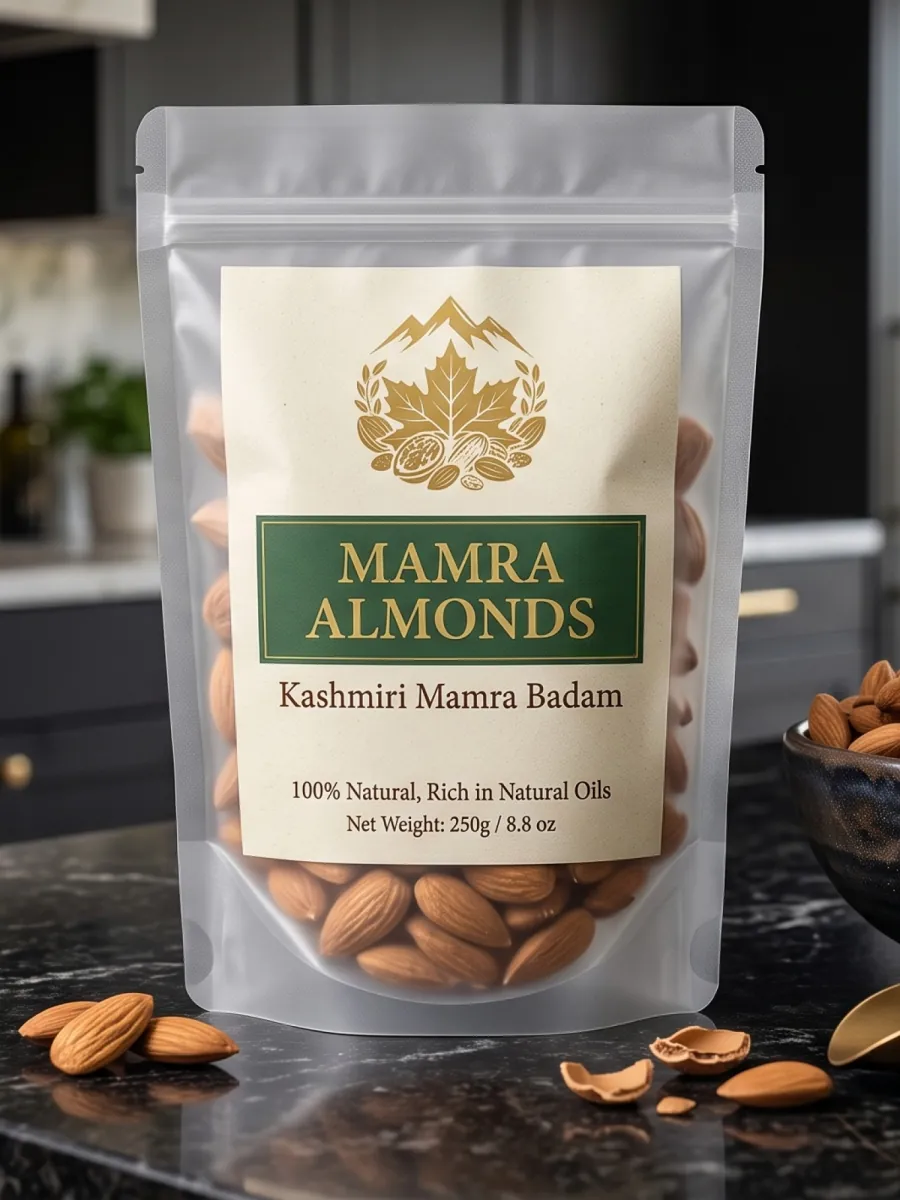
What we can share is what we say about our own range. Our Mamra Badam is Grade A, hand-graded, with no additives, preservatives or artificial coating. Our walnut halves carry no preservatives or coating. Our salted pistachios contain pistachios and salt, nothing else. These are the same questions we think every buyer should ask of any dry fruit.
To see what we sell and the current prices, visit the products page. To read about the family behind it, see our story.
Frequently asked questions about choosing anjeer
How do you pick good dried figs?
Choose plump, evenly coloured figs that smell mildly sweet and give slightly when pressed. Avoid hard, sticky, fuzzy, dusty or sour-smelling ones. Open a few from the middle of the pack, not only the top.
Smell and touch beat colour in judging condition.
Is bright, light anjeer treated?
It may be, but not always. Sulphur dioxide helps dried fruit keep a light colour, so very bright, uniform figs are worth a question. Variety, drying and age also change colour, so ask the seller and read the label.
A darker fig is not a guarantee of no treatment either.
What is sulphur dioxide on dried fruit?
It is a permitted preservative that keeps dried fruit light and slows spoilage. Sensitive people, including some asthmatics, can react to it. In the US, sulphites at 10 ppm or more must be declared. Ask for the label.
If you have asthma or an allergy, check with your doctor.
Turkish, Afghan or Indian anjeer: what differs?
Variety, climate, size and drying method differ. We found no reliable source that ranks the origins on safety or taste. Judge each pack by its smell, texture and label, and ask the seller what was done to it.
The country name alone tells you little.
How should you store anjeer?
Move opened anjeer to a dry, airtight jar and keep it in a cool, dark cupboard. In humid weather, use the fridge. Always use a dry spoon. Moisture and heat are what spoil dried figs.
Our guide to eating dry anjeer has the full storage steps.
Buy by smell and touch, then ask one more question
The best anjeer check is the simplest. Smell it, press it, look for mould and holes, and ask whether sulphur was used. Colour and size are hints, not proof.
A seller who answers plainly about origin, grade and additives is worth your trust. One who avoids the question is not. If you want almonds, walnuts or pistachios, which we do sell, see the current range and prices.