Two raisins, one grape family, very different jars
Kishmish vs munakka is a question every Indian kitchen meets sooner or later. One recipe says kishmish. Your grandmother says munakka. The shop sells both, and the labels rarely explain why.
Both are dried grapes. The difference lies in the grape, the size, the seeds and what each does in your food. This guide keeps to those facts and does not make health promises for either one.
Valley Origin sells Kashmiri dry fruits, not raisins, so this is an independent guide. You can see what we do sell on the products page. If you are planning festive boxes, the Diwali family gifting guide shows where raisins fit.
What is kishmish, and what is munakka?
Kishmish is the small, seedless raisin, usually golden, green or dark. Munakka is a large, plump, dark raisin that usually still has seeds. Both are dried grapes of the same species, Vitis vinifera. They differ in grape type, size and how they are used.
Kishmish (also called bedana) comes from seedless grapes. In India the common seedless grape for raisins is Thompson Seedless. It is also known worldwide as the sultana grape, a pale green, oval, seedless variety. Kishmish can be green, golden or dark depending on how it is dried.
Munakka (also spelt manuka or manuk) comes from larger grapes that carry seeds. The berries are bigger, so the raisin is bigger, darker and more wrinkled. Most trade pages describe it as brown to blackish-purple and sticky.
Some sellers use the word “black kishmish” for a dark seedless raisin. That is not munakka. If it has no seeds and is small, it is kishmish, whatever the colour.
Which grapes are they made from?
Kishmish is made from seedless grapes such as Thompson Seedless. Munakka is made from larger seeded grapes. Sources disagree on the exact munakka varieties, so do not trust a label that names one. Judge it by size, colour and seeds instead.
India’s biggest raisin region is Sangli in Maharashtra. Sangli raisins carry a Geographical Indication granted in 2016, and the district grows around 70% of the country’s raisin supply. Its main raisin grapes include Thompson Seedless, Manikchaman, Sonaka and Tas-A-Ganesh. Its raisins are green, yellow and black, famous for an even golden-green or golden-yellow look.
That detail matters for buyers. Seedless kishmish in Indian shops commonly comes from regions like this, not from Kashmir. Kashmir’s strength is almonds, walnuts and saffron.
Munakka is harder to trace. It is a trade name more than a single grape, so two bags of munakka can be quite different.
How do kishmish and munakka differ in colour, size and drying?
Kishmish is small, slim and smooth, in green, golden or dark shades. Munakka is large, round, wrinkled and dark brown. Drying also differs: kishmish is often shade-dried or dried in machines to hold colour, while munakka is mostly sun-dried.
Raisins are made by drying grapes. The grape skin has a waxy layer that slows drying, so makers use sun drying, shade drying or mechanical drying, often after a pre-treatment that speeds water loss.
Golden raisins usually get their colour from sulphur dioxide treatment. The Raisin article describes sultanas and golden raisins as treated to reduce browning. If you want a raisin with no treatment, ask the seller how it was dried.
Here is the short version side by side.
| Kishmish | Munakka | |
|---|---|---|
| Grape | Seedless, such as Thompson Seedless | Larger, usually seeded |
| Size | Small, slim | Large, plump |
| Seeds | None | Usually present |
| Colour | Green, golden or dark | Dark brown to blackish |
| Texture | Soft, smooth | Chewy, sticky, wrinkled |
| Best for | Kheer, pulao, baking, snacking | Snacking, soaking, slow-cooked sweets |
How do they taste, and which is sweeter?
Both are very sweet, but sellers disagree on which is sweeter. Kishmish tastes mild and clean. Munakka tastes deeper and a little winey, with a chewier bite. Sweetness depends on the grape and the drying more than on the name.
Read any three raisin pages and you will find two opinions. Some say kishmish is sweeter. Others say munakka is sweeter. The honest answer is that it depends on the batch.
What holds across most descriptions is the flavour shape. Kishmish gives a gentle, fruity sweetness that disappears into a dish. Munakka has a more concentrated, jammy taste that stays noticeable.
Taste one from each bag before you cook a large batch. A bitter or sour raisin usually means over-drying or old stock, not a different type.
What about nutrition?
Raisins are mostly natural sugar and carbohydrate, with some fibre and potassium. No reliable source shows a large nutrient gap between kishmish and munakka, because both are dried Vitis vinifera grapes. Claims that one is far richer are usually marketing.
The USDA’s FoodData Central lists raisins as a food by variety, and it does not split them into kishmish and munakka. Use it to compare per 100 g values for any raisin you buy.
Many pages sell munakka on health claims. We do not repeat them. Raisins are food, and a small handful is a sweet snack, not a remedy.
Raisins are sugar-dense, so portions matter. If you have diabetes, are pregnant, or are feeding a young child, check with your doctor about how much to eat.
Which is better for kheer, pulao, soaking and snacking?
Use kishmish for kheer, pulao, halwa and baking, because it is small, seedless and softens evenly. Use munakka for eating by hand or soaking, where its size and chew are an advantage. Remove munakka seeds before cooking.
Kishmish is the default in Indian sweet and rice dishes. A spoonful in pulao or biryani plumps up and spreads sweetness without a crunch. It also fries well in ghee for a garnish.
Munakka is bulky. In kheer it sinks and can turn mushy, and the seeds bite hard. Slice it open, take out the seeds, and chop it if you want it in sweets such as laddoo.
For soaking, either works. Plump raisins need a few hours in water. Drain them and eat them the same day. Soaked raisins spoil faster than dry ones.
How do you pick good raisins?
Pick raisins that are plump, evenly coloured, slightly sticky but not wet, and smell fruity. Avoid bags with sugar crystals, hard lumps, stems, or a sour or fermented smell. Ask the seller how the raisins were dried and whether anything was added.
Check these five things at the shop or when the parcel arrives.
- Look at the colour. Kishmish should be uniform. Patchy brown and green mixed together suggests mixed lots.
- Press one. Good raisins are soft and give a little. Hard, shrunken raisins are old.
- Look for sugar. A few white crystals can be natural sugar. A heavy white coat or clumps stuck together points to age or moisture.
- Smell the bag. It should smell of dried fruit. Sour, fermented or musty means reject.
- Check the stems and seeds. Kishmish should have none. Munakka will have seeds, so check for leftover stems and grit.
Compare value by weight after removing seeds. A big munakka pack contains seeds you will throw away.
How should you store raisins?
Keep raisins in an airtight jar in a cool, dry cupboard. Use them within a few months, or refrigerate in warm, humid weather. Moisture is the main enemy, because it causes clumping, sugar crystals and mould.
Indian monsoons are hard on soft dried fruit. Raisins are soft, sticky fruit, so they take up damp air more easily than crisp nuts. Always use a dry spoon and close the lid firmly.
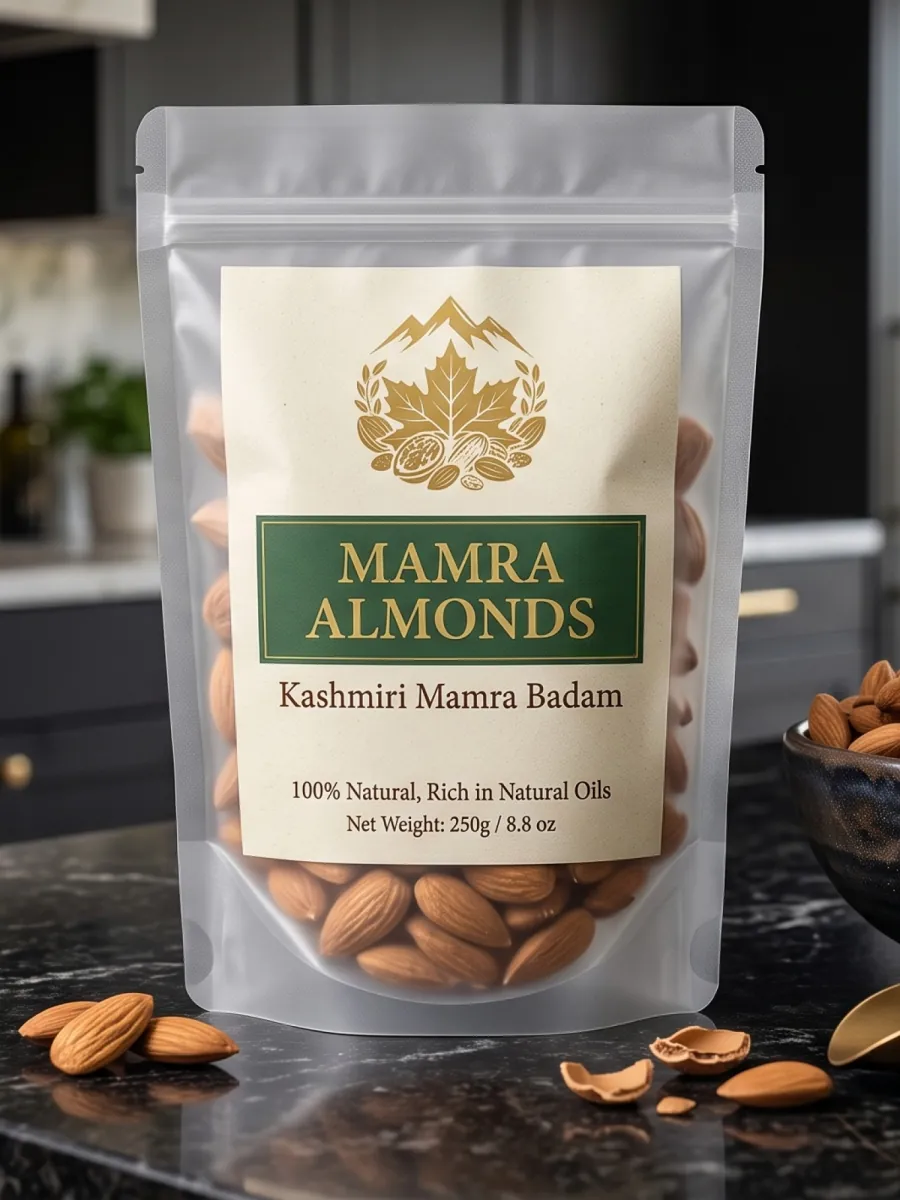
The same airtight-jar logic that protects nuts works here. Our guide to storing Mamra Badam explains the steps. If raisins smell sour or show fuzzy growth, discard the whole jar.
Frequently asked questions about kishmish vs munakka
Is munakka the same as kishmish?
No. Both are dried grapes, but kishmish is small and seedless while munakka is large, dark and usually has seeds. They come from different grapes and behave differently in cooking, so they are not direct swaps by weight.
If a recipe says kishmish and you only have munakka, deseed and chop it first.
Which grapes are kishmish and munakka made from?
Kishmish comes from seedless grapes such as Thompson Seedless. Munakka comes from larger grapes that have seeds. Both are Vitis vinifera, and sources disagree on named munakka varieties, so size and seeds are the safer test.
India grows most raisin grapes in Maharashtra, with Sangli the best-known centre.
Which is better for kheer?
Kishmish is better for kheer. It is small, seedless and softens without turning mushy. Fry it briefly in ghee before adding it, so it plumps and does not sink into the milk.
If you use munakka, deseed and chop it, and add it late.
Are golden raisins and kishmish the same?
Mostly. Golden raisins are seedless raisins, often treated with sulphur dioxide to keep a light colour. Kishmish is the Indian name for seedless raisins in general, so golden kishmish is one colour of it.
Ask the seller if sulphur dioxide was used if that matters to you.
Does Valley Origin sell raisins?
No. Valley Origin sells Kashmiri dry fruits direct from growers, starting with Kashmiri Mamra Badam. We do not currently sell kishmish or munakka. The current range is on our products page.
Buy raisins from a seller who states the grape, drying method and pack date.
Choose the raisin for the job, not the label
Pick kishmish when the dish is sweet or rice-based, and you want a small, soft, seedless raisin. Pick munakka when you want a chewy, plump raisin to eat by hand, and you do not mind the seeds.
Whichever you choose, trust your eyes, nose and fingers over the name on the bag. Ask how it was dried, check for clumps and sour smells, and store it airtight.
Valley Origin works the same way with almonds: origin, grade and freshness come first. If you are buying Kashmiri dry fruits as well, see the full range on our products page, and read how we work on the Valley Origin story.